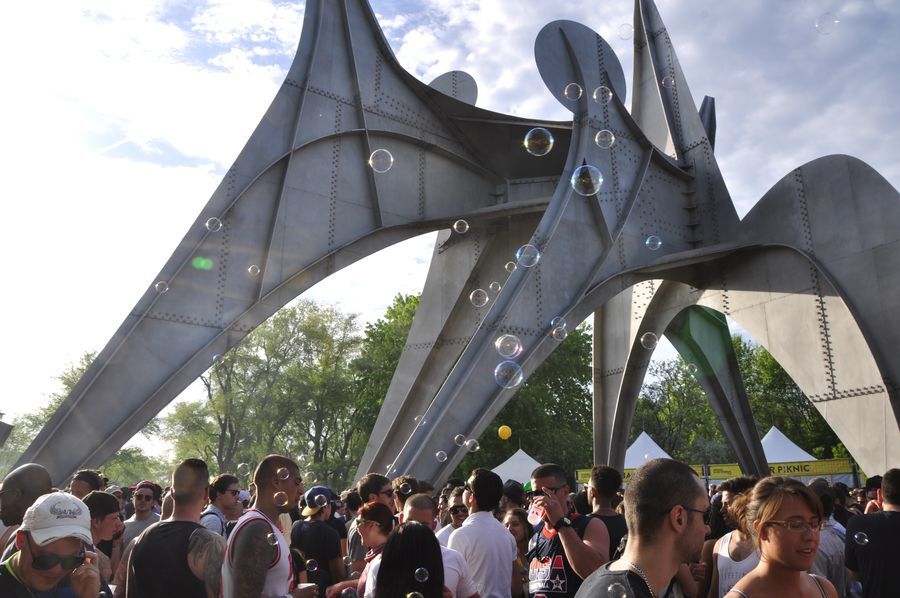
Figure 1. Beats and bubbles under the Alexander Calder statue at MUTEK 2014. Photo Credit: tobias c. van Veen (2014).
Weekend Societies in the Walled Garden: Montréal’s Piknic Electronik in the Post-Pandemic Era
California State University Northridge (USA)
<https://dx.doi.org/10.12801/1947-5403.2025.17.01.11>
MUTEK at Piknik Electronik 2011–2012, tobias c. van Veen (2023a)
Piknic Electronic has been one of the defining features of Montréal’s post-rave scene. Established in 2003, it began as a smaller-scale Sunday after-party of a few hundred vibrating souls, held in Parc Jean Drapeau on the Île de St. Hèlene. The island park is situated in the middle of the St. Laurent River, across from the city (and bigger island) of Montréal. What made the Piknic particularly unique was the dancefloor, situated underneath Trois Disques, a towering Alexander Calder sculpture created for Expo ’67. With its modernist metal arms arising like church spires, the sculpture framed the speakers and sky above the unholy sin of shaking-and-shimmying below.
Figure 1. Beats and bubbles under the Alexander Calder statue at MUTEK 2014. Photo Credit: tobias c. van Veen (2014).
From the dancefloor, a glance West across the waters revealed the setting sun behind the Montréal skyline, as the party went from early afternoon well into the evening dusk. While the event always had an admission fee to enter the cordoned-off site, it originally had no on-site bar or food venues, taking advantage of a wonderful French cultural custom enshrined in Québec’s lax liquor laws allowing one to bring your own wine, as long as one is also carrying a picnic. Thus, Piknic was born, with electronic punters arriving with their baskets and bottles, getting smashed under a gleaming monument to yesterday’s modernism. The event rode the long tail of the post-raver vibe, satisfying the need for an aging raver populace to come together in what St John has aptly coined “weekend societies” (St John 2017).
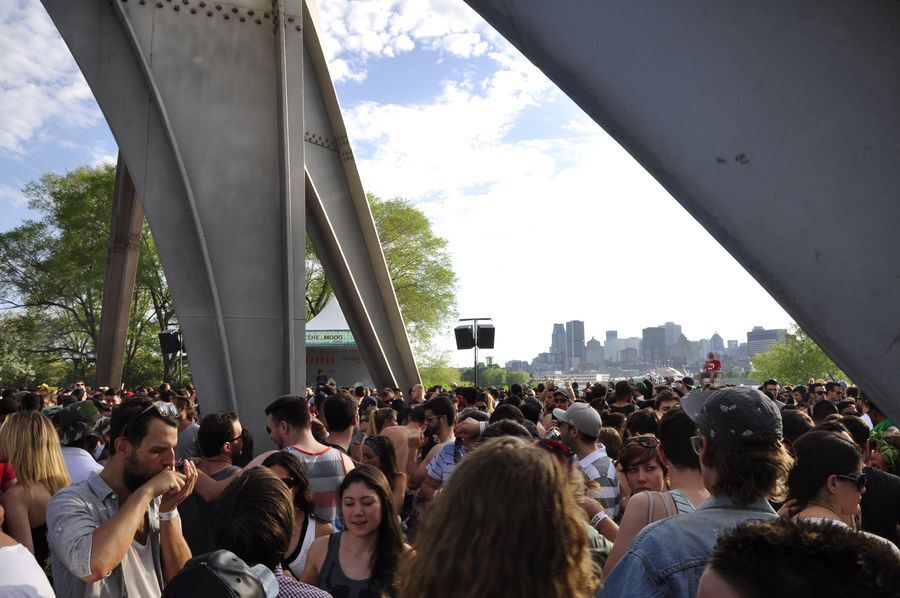
Figure 2. In the heat of the dancefloor as the sun slowly sets over the city at MUTEK 2014. Photo Credit: tobias c. van Veen (2014).
Arriving from the late morning onwards, Montréal’s dancefloor denizens would crawl out from the clubs, arise from the depths of the after-hours and often just awake and attend a Sunday for the boogie-down—much like Berlin’s Berghain scene, which effectively shifted the meaning of “late” to the next day entirely. I attended Piknic frequently from its inception in 2003 until I departed Montréal in 2008, as well as subsequent MUTEK showcases from 2009–2014.
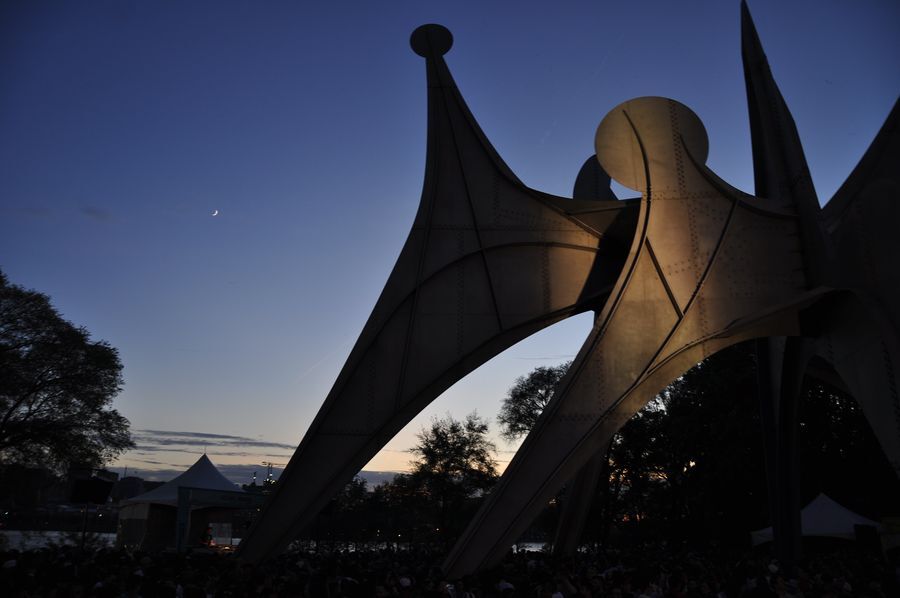
Figure 3. As the sun set, the statue and the vibe both became lit. MUTEK 2014. Photo credit: tobias c. van Veen (2014).
Practically everyone arrives by way of public transport. I would catch dancefloor colleagues heading to the Parc on the underground Métro, carrying their bundles of boozy picnics for a bring-your-own-bottle event that would often descend into a sordid affair, with beats echoing across the concrete while couplings would escape to the woods. In Canada, long before recreational legalization in 2018, cannabis was widely used and (mostly) tolerated and other psychedelic substances consumed, with little if any interference from the authorities. It was a near ideal urban space for a temporary zone of sonic catharsis, where the sound system could thump well into the evening. With hours of music in my ears, I could return home in due time for a decent night’s sleep before restarting the grad-school grind on Monday.
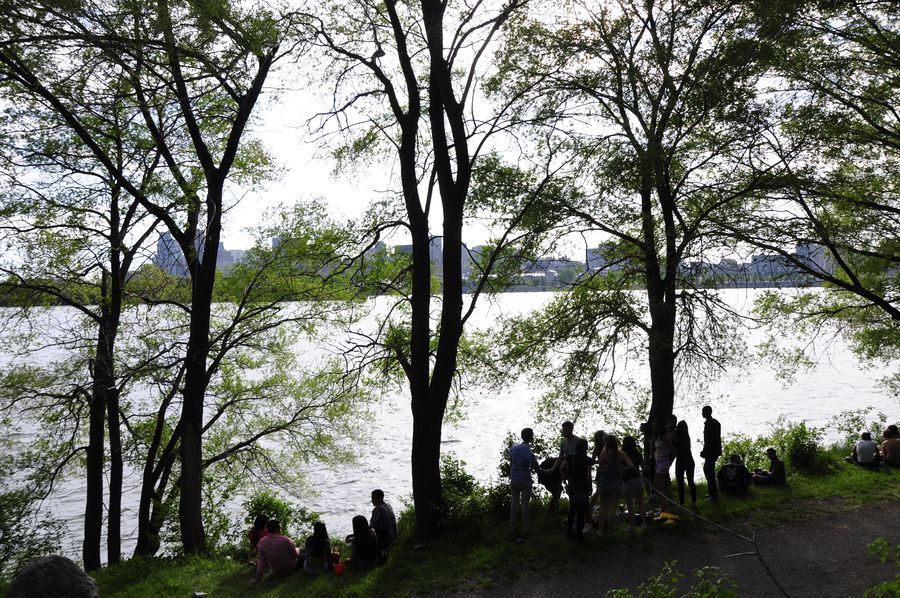
Figure 4. The scene spilled beyond the gates, as mini parties dis/assembled everywhere, including along the banks of the river St. Laurent. MUTEK 2014. Photo credit: tobias c. van Veen (2014).
Over the years, several epic MUTEK showcases at Piknic were held. When MUTEK would overtake Piknic, it added a degree of the avant-garde to the staple mainstream DJs. This said, Piknic eschewed the EDM influence and increasing popification of electronic dance music, sticking to acclaimed producers and DJs in founding genres. The MUTEK Piknics became an important part of the international festival over the years, often creating a more open, casual and autonomous space for a more intimate and unsanctioned encounter with the event’s producers and DJs. With its unscheduled tag teams and drunken DJ sets becoming legendary in the scene lore, Piknic was often the highlight of the MUTEK festival experience, as attendees and artists jived elbow-to-elbow on a dancefloor where the minimalism of the music echoed the modernism of Calder’s statue. Without any dancefloor infrastructure save for a small, scarcely-raised stage, there was no green room, VIP lounge or other barrier between artists and attendees, facilitating a “post-rave” mix-up that mostly eschewed boundaries physical and social, as well as mixing up genders and ethnicities on the dancefloor.
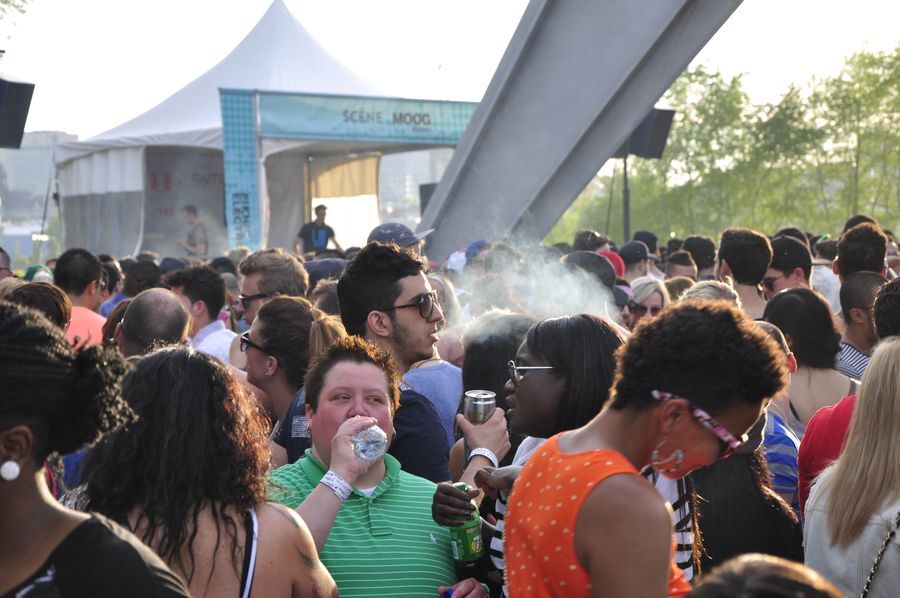
Figure 5. A fully mixed scene lets loose the smoke at MUTEK 2014. Photo credit: tobias c. van Veen (2014).
While there have been too many notable MUTEK events at Piknic to mention (see van Veen 2009), stand-outs included a multi-hour vinyl and Traktor DVS (Digital Vinyl System) tag team between Richie Hawtin and Ricardo Villalobos in 2006 (see: video and video). Hawtin and Villalobos upped the ante on extended and inventive mixing that demonstrates a level of skill rarely heard in the digital era. Also notable was Nôze’s bonkers-drunk DJ set in 2008 that had the duo eating grass—of the lawn variety—after drinking several bottles of vodka, while still nailing a stellar deep house mix on wax. Wolf and Lamb likewise dropped an unforgettable deep house set in 2012 that had the whole of Piknic grooving without respite. On the side stage, Sutekh (a.k.a. Rrose) played a memorable leftfield set in 2011, crafting such a creative musical journey that it mixed Bach cantatas into experimental ‘60s electronics and spaced-out acid techno.
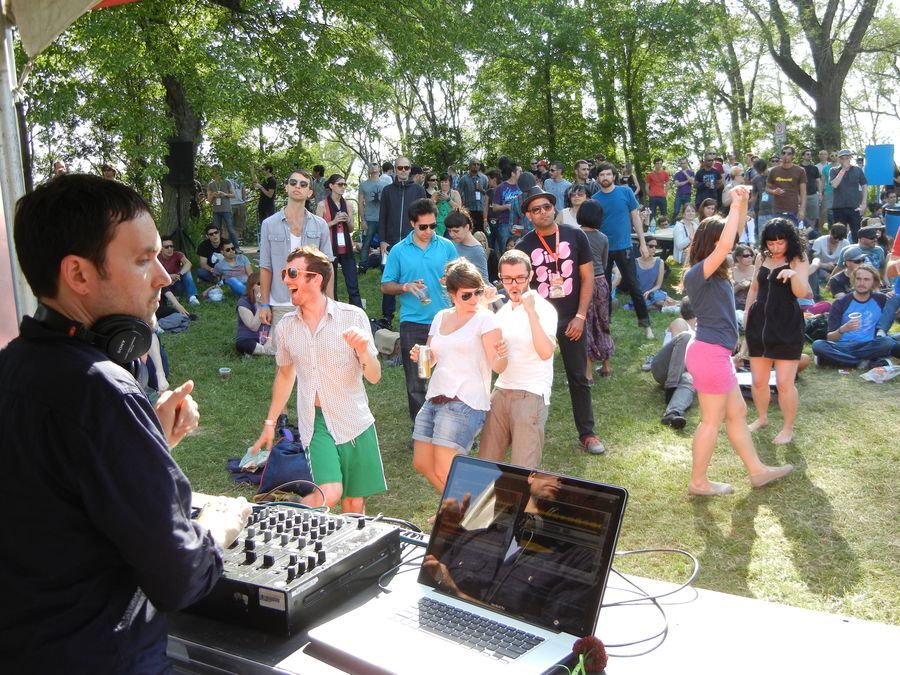
Figure 6. Sutekh moving the crowd through centuries of cantatas at MUTEK 2011. Photo credit: tobias c. van Veen (2011).
Memorable too was James Holden’s DJ set that followed Sutekh’s, laying down an Italo disco journey that left attendees in a cosmic state of un/consciousness.
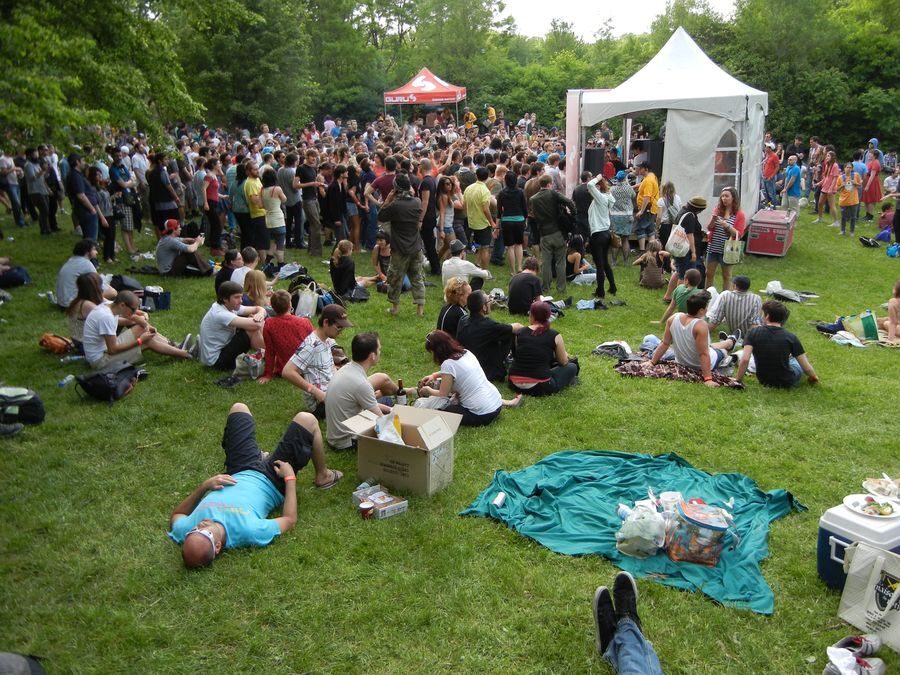
Figure 7. James Holden laying the second “scène” to waste at MUTEK 2011. Photo credit: tobias c. van Veen (2011).
Piknic deserves its reputation as a vibrant space for notable DJ and live performances by a who’s-who of international techno, electro and house music masters, as well as throwdown sets from stellar local DJs and producers. What I am interested in reflecting on is how each set at Piknic becomes accented by the spatial conditions of the site. By this I mean that the material conditions of the site, its location, positioning between art and nature, the city and the river, all of which amount to its place, contributed to a space in which a certain era of Piknic took shape. With the notion of era, we introduce temporality to this spatial manifestation that amplifies its imaginary from the place. Era signifies how no place stays the same; and thus no space remains as-is, stuck in time. This era felt like a time-away-from-time, an island escape from the urban pressure cooker, as one stepped into a surreal admixture of iconic metal sculpture and green nature. In remarking upon this era, I draw from my own notes and not just banal nostalgia. From 2011:
In front of the DJ booth, the relationship between dancer and DJ is almost at eye-level, producing an intimacy to the dancefloor. There is very little if any fencing. Separation is minimal amongst the scene. Minimal music carries the echoes of modernism as it pings the Calder statue. The fabrication and power that Calder pursued, of suspended metal, girders and physics, has become alive in the music echoing below.
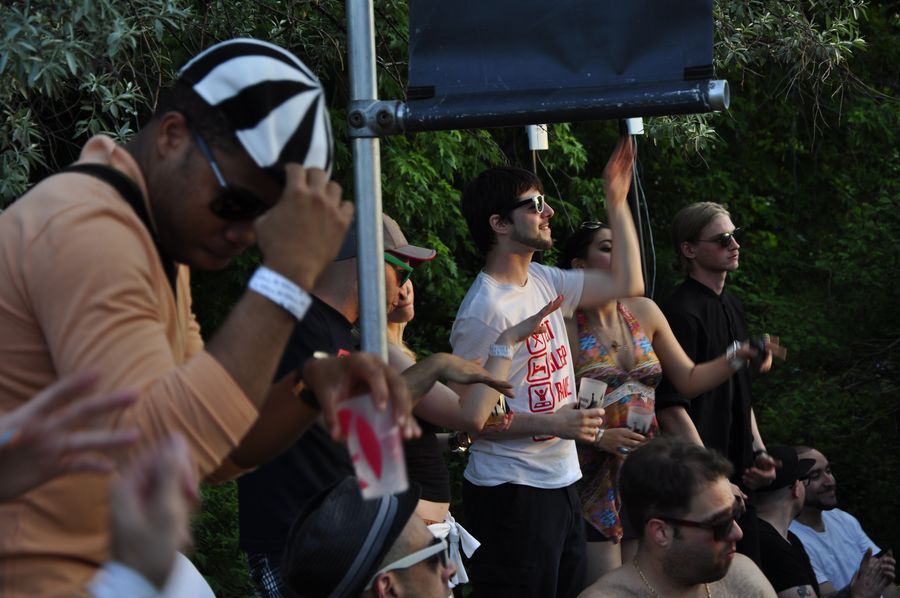
Figure 8. The stylin’ scene in full-motion at MUTEK 2014. Photo credit: tobias c. van Veen (2014).
The best Piknics during this era were the warm summer nights; but sometimes the thunder and rain would descend, creating a dedicated dancefloor eking it out under umbrellas. The concrete space under the Calder statue was surrounded by stacks of quad sound, wickedly tuned for a warm vibe that emphasized intimacy over mind blasting volume. One could dance directly in front of the speaker stacks and for many years (before minimal fencing of the DJ booth), one could directly approach the DJ. Under the Calder statue, the dancefloor was never more than a few hundred, though several hundred more could dance and listen from the periphery in the surrounding trees and grass. It was at once intimate yet wild.
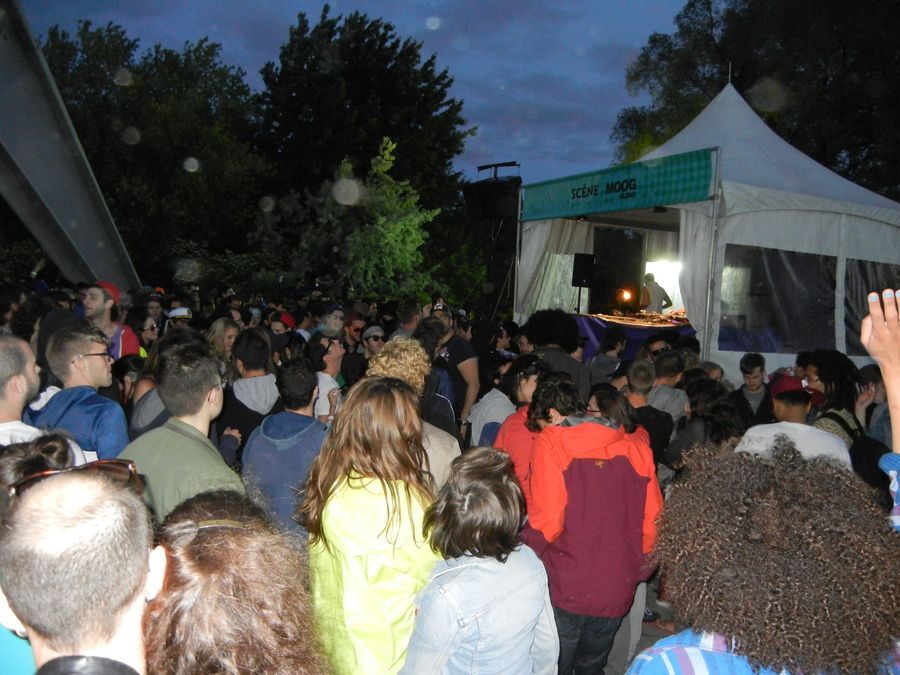
Figure 9. Fully activated dancefloor surrounds the small, raised DJ booth at MUTEK 2012. Photo credit: tobias c. van Veen (2012).
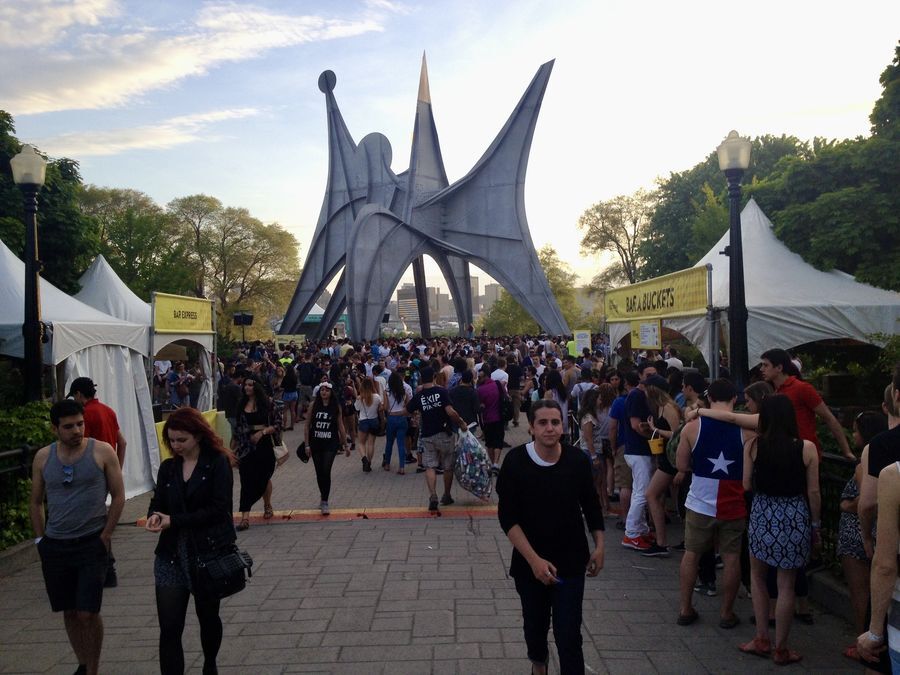
Figure 10. The “old” Piknic at MUTEK 2014, under the Calder statue, but with the commercialization of amenities and BYO-no-more. Photo credit: tobias c. van Veen (2014).
The event quickly grew, however, with organisers adding a cash bar and food on the dancefloor periphery, resulting in event-altering changes to the admission policies. Once Piknic began selling alcohol, you couldn’t legally bring your own, as it became a liquor-controlled space and so the vibe of the event changed as fewer attendees brought picnics. The blankets-and-lounge atmosphere began to give way to a harder, more drug-driven scene, often arriving unslept from Montréal’s afterhours and clubs. The organisers began bringing-in more festival infrastructure, with fencing and barriers creating a more policed and controlled atmosphere. The DiY ambiance and post-raver-autonomy gave way to a spicely-priced plastic-cup affair. Soon enough, only the MUTEK Piknics retained the post-raver vibe. MUTEK hosted its last Piknic under Trois Disques in 2012, until returning years later after Picnik’s move to a different location, circa 2018. By then, Piknic had become a global venture, with outposts in Barcelona (2012), Melbourne and Dubai (2014), Santiago (2015) and Paris (2019).
But then something happened to the site that, in a way, gave new life to Piknic. From 2017–2019, the City of Montréal undertook renovations at Parc Jean Drapeau, replacing the meandering forest-lane that led to Trois Disques (providing shade and secrecy for Piknic’s dancefloor) with an Allée Calder: a boring concrete lane lacking in the imagination and esoteric mystery of Calder’s modernism, more amenable perhaps to the straight F1 attendees the Parc is often known for (see Tucker 2019). Having ripped out many of the trees, the Allée provides a predictable sightline from the Métro station to the statue.
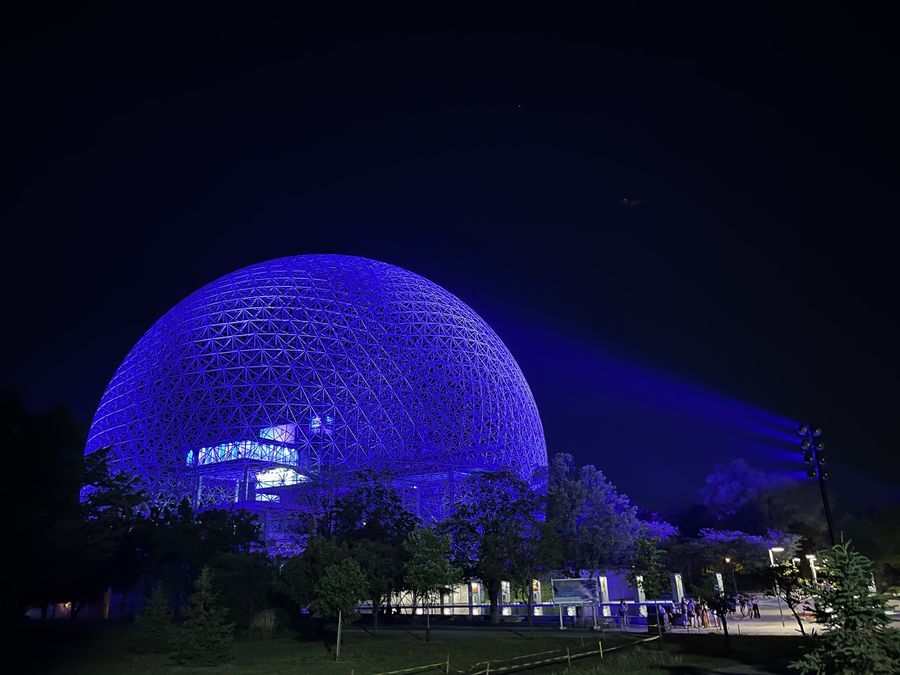
Figure 11. East from the Allée Calder is the former American Pavilion from EXPO ’67, built by Buckminster Fuller. Photo credit: tobias c. van Veen (2022).
However, with the renovations, Piknic was forced to move locations to an enclosed, fenced area just north of the former site. No longer is the dancefloor underneath the iconic Calder statue; now it is a massive, well-enclosed pen of trees and park, surrounded by well-stocked bars that only accept plastic or tap—and no cash. While the original site ran a smaller, second stage in an exquisite forest clearing, backed by a small river tributary, the new site has the second sound system directly adjacent to the main floor, resulting in a blaring clash of stupendously-loud speakers. The entire event is now festival-sized, primed for thousands, with raised stages and flown sound systems. While there is enclosed parkland in which to play, the overall area is much smaller and the vibe is more corporate, much more a festival in the Gen Z sense of EDM festivals, where the attendees are more an audience of (still dancing) spectators than a scene in which artists, dancers and creatives mix. Everything is strictly organised and thus strictly policed, with lines of porta-potties and corporate vendors. It is the weekend society all nicely packaged for the next generation. All this said—as in critiqued—it is also surprisingly and somewhat mercifully, advertising free, with no gigantic ad-banners adorning the DJ stages. There are many things to applaud in the upscaling of Piknic, including a banger, properly flown sound system; a wooden dancefloor that is soft on the feet; a fake grass zone on the dancefloor’s periphery, with small plastic picnic tables and lounge areas; plenty of security and emergency services. Of course, it is penned as per all 21C concerts, with an ever-bigger barrier between audience and performer ensuring that the vibe never spilleth over into the dangerous illusions—I speak ironically—of dancefloor autonomy and demands for participatory communitas that defined ‘80s and ‘90s rave culture.
Piknic Electronik | OctaveOne + Claire | 29 May 2022 (tobias c. van Veen, 2023b)
Walking into the event on May 7th, 2022, downing an (illegit) beer as I slowly drifted past a line of cop cars, I finally arrived at the scene after riding the Montréal Metro to Parc Jean Drapeau. I found myself carried along by the massive influx of attendees, as we crested in the hundreds over a metal set of stairs that bypassed the park’s ring road to the ticket check-in. As I went with the flow of hundreds of youthful bodies (feeling all the ages of my four-plus decades), I felt relaxed and at peace with the slow intake scenario, as did mostly everyone else. The vibe was good, not at all the jittery, post-club scene that I remember Piknic descending into a decade prior. I was buoyed by the energy, which felt amazingly positive—not the least because this was the first summer of Piknic’s return since the pandemic. If the intimacy and modernist uniqueness of the original site have been depleted by the new event’s walled-garden, transforming something of a renegade event into a kind of paradise-lost, it made up for it on two accounts.
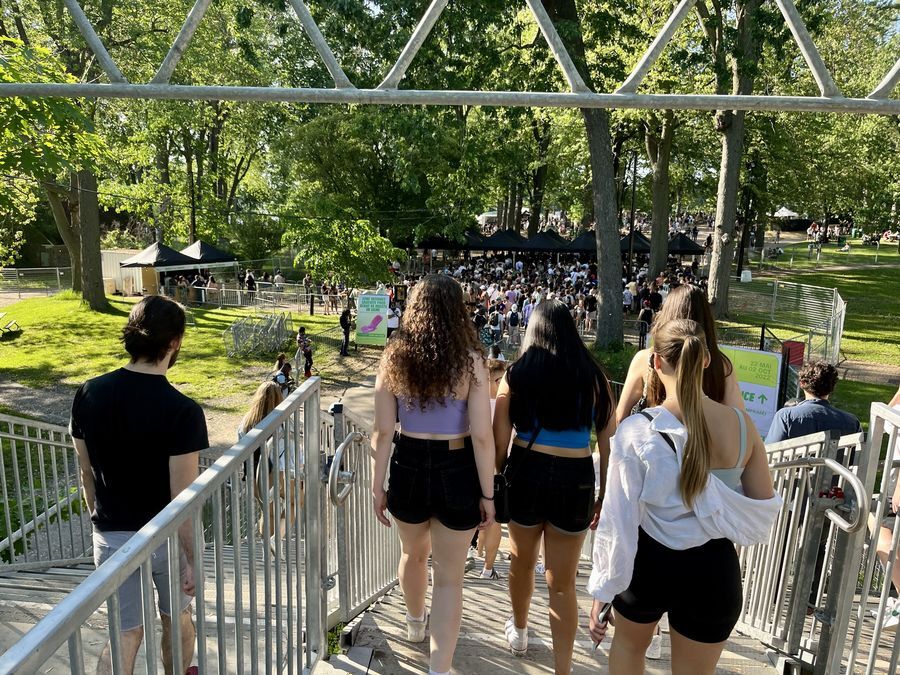
Figure 12. Up and over the stairs into the walled pleasure dome that if only Kubla Kahn did decree. Photo credit: tobias c. van Veen (2022).
First, of course, remains the potential of electronic music to mindmeld the masses into a kind of melee of unfettered movement. And I’ll add one more alliterative moment: it was marvelous. I was there for local talent (and fellow friends and colleagues) DJs Claire and Cyan (CKUT)—two female producers and DJs who held court with deep, minimal and bangin’ acid techno. Claire was especially impressive, a talented sound sculptor on the decks, creating a strong connection with the crowd through her flawless vinyl mixing, accentuated by her eye-contact with the dancefloor. DJ Cyan is more akin to a techno-cyborg, delivering the dancefloor a hard and rapid digital set that accelerated the arena into sweet anticipation for the live headliners that night, whom were no less than Detroit’s veteran techno producers, Octave One. Octave One did not disappoint: with Lawrence Burden’s signature head wobble and his brother Lenny’s laser-focused MIDI moves, they appropriately doused the dancefloor with a shattering cascade of polyrhythmic percussion, slamming low-end 4/4 and an exuberant, if not ecstatic refrain of synthesizer soul that screamed Detroit. The soundsystem was at its peak, as much felt as heard, with full volume clarity delivering across the audio spectrum.
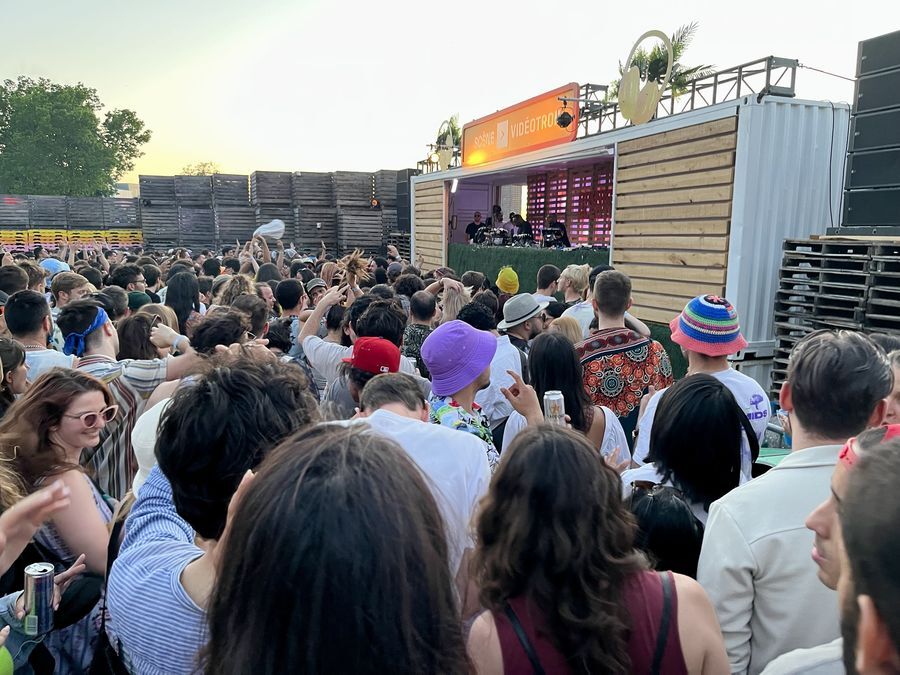
Figure 13. Octave One from the side of the thundering dancefloor. Photo credit: tobias c. van Veen (2022).
The other aspect defeating the enclosure vibes of the walled garden was the audience itself—which despite the commercial surrounds nonetheless contributed something all-the-more intangible to the vibe. Graham St John writes of the vibe that it expresses “a desire for a sacred sociality, a social warmth howsoever temporary, perceived to have been lost or forgotten in the contemporary world of separation, privatisation and isolation” (2009: 38–9). This “contemporary world” of consumer surveillance, fragmented sociality, isolated existence and precarious employment became all the more palpable (and oppressive) during the lockdowns and restrictions of the pandemic. Thus, the escape from pandemic isolation has amplified and altered the vibe, just like how the post-1989 vibe of Berlin’s techno culture was intensified by the Fall of the Berlin Wall, creating new political and spatial conditions for a cultural explosion of the ecstatic. Being in the crush of the crowd, which was so intensely packed that one could barely move, was nonetheless a warm and gracious experience, though at times, admittedly claustrophobic, even in the open-air environment. It was possibly one of the most packed outdoor dancefloors I’ve ever been on—which is saying something, given the suffocating warehouse crush of the ‘90s massives. The Gen Z attendees were in exuberant moods and the vibe was totally high and flyin’. Sally Strommer defines the vibe as “an active communal force … . the vibe is an active, exhilarating feeling of now-ness that everything is coming together” (2001: 73). People were in the zone, being in the moment of the crush, with not too many phones held aloft. Mostly, the scene was dancing and not recording, participating and not spectating.
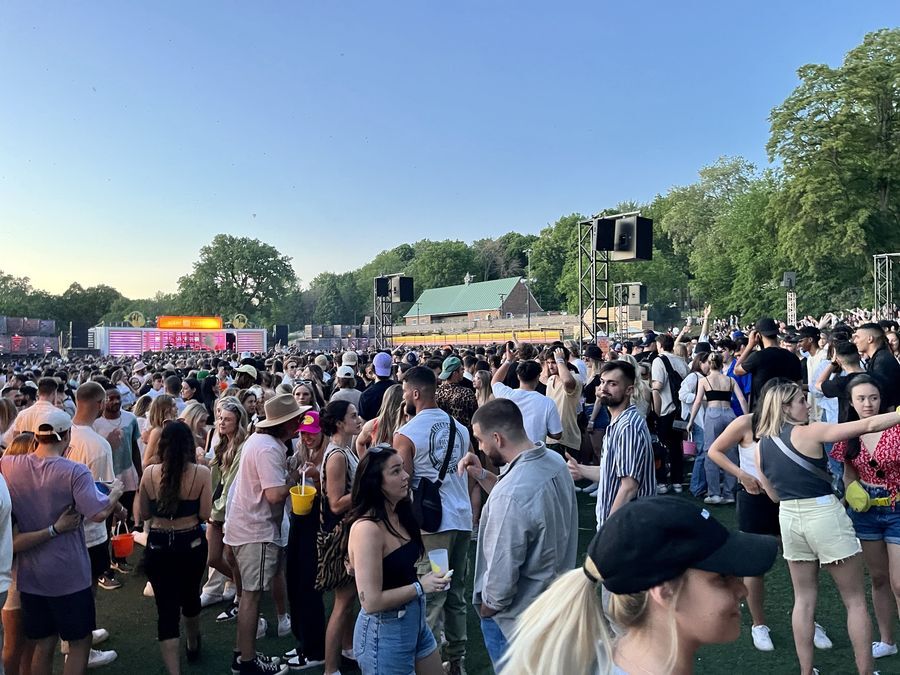
Figure 14. Thick in the midst of an ever-growing mainstage dancefloor at Piknic 2022. Photo credit: tobias c. van Veen (2022).
The very fine and high-flyin’ vibe is perhaps attributable to a post-pandemic effect of exuberant release, which for some of the youth, might be the first time they had ever been on such a large-scale, open-air dancefloor. As the dancefloor let loose from nearly three years of depressive viral ugliness, it occurred to me that I was bearing witness to parts of a generation (in a particular time and space) coalescing into a scene (see Straw 2001; van Veen 2016). Caught in the throng, it occurred to me that for many of Gen Z, it is at events like these, possibly in this very moment, that the collectivity of a generation comes to know itself. A scene is shaped; its sensibilities and boundaries are construed in moments where a dancefloor circumscribes a particular mass movement of bodies. This event and events like it, are pivotal for Gen Z youth who came of age during an era of lockdowns, social media and, in the US, continuing civil unrest. In Canada, the Québec Provincial government issued some of the strictest lockdown measures, with curfews in the City of Montréal that kept residents from enjoying the (relatively safe!) experience of the outdoors. That said, one can only wonder—or rather, absent of a proper ethnographical survey/interview process—what the existential uplift really amounts to, given the overwhelming gloom and doom of a death-dealing climate crisis that Gen Z, thankfully but sadly, is all too aware of (see this interview with Britt Wray). It is a very different existential jouissance than that experienced by the late 1980s-to-90s ravers encompassing boomers, Gen X and (young) millennials.
For the acid house to raver generation, rave culture was the escape hatch from the Cold War that went hand-in-hand with early internet utopianism, an ecstatic network of spontaneous dance uprisings releasing pre-millennial tension, where for a brief moment, we all dreamed of a techno-utopian dancefloor replete with the return of collective ritual. The internet was to connect us in harmony and superintelligence; the brutal capitalist realism (and dreary dullness) of the mental health epidemic of social media was yet to come. For the ravers, dreams of retiring the missile silos for social programs and collective emancipation from a classist and racist society flickered on the horizon… at least until 9/11 and the Iraq War, the Patriot Act and all that has followed, as the US descends into authoritarianism. Today’s flavour of jouissance would be a fascinating topic for a deep dive into the Gen Z psyche, howsoever intersectionally and geopolitically situated in respect to ongoing formations of EDMCs during a new, permanent era of climate and political crisis.
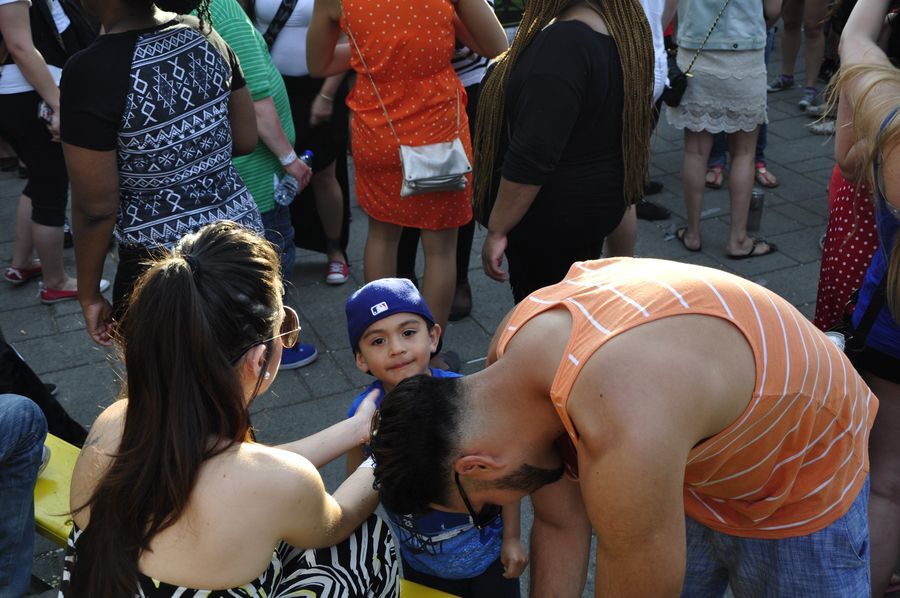
Figure 15. Gen Z getting an early start at MUTEK 2014—with millennial parents. Photo credit: tobias c. van Veen (2014).
And so the return of Gen Z to this dancefloor, at least, keeping in mind that it is not synecdoche to the global diversity of scenes and peoples as it transects geopolitical borders and intersectional identities, has been as joyous as it is momentous, the biggest generation since the Boomers to let loose their fashion and style. A brief note on that fashion and style—for the most part, it seems to have been cribbed from late 1980s and early 90s J.C. Penney, from bellybutton-high jeans (a.k.a. “Mom jeans”) to massive, round, wireframed glasses. Plus a lot of white t-shirts. It is very clean, unlike the grunge and scrappy wear of 90s raverfolk. It is also more vanilla, unlike the highly-manicured, scantily-clad and neon night-vibe of massive EDM festivals. It bears little resemblance to the styles that emerged out of 20th century dance cultures, whether disco decadence or the cand-E raver fashion of late 90s to mid 00’s millennials, covered in bracelets, fun fur and day-glo. Also mostly absent were the flowing phat pants of the raverkin, though the perennial recycling of 1960s psychedelia, often repackaged in various ways, continues unabated.
Mostly what I saw was a kind of jeans-and-t-shirt vibe, as if the Z generation was a blank canvas awaiting its own stylistic expression in fashion. Some darker styles were prevalent, with a smattering of goths, but the majority of the crowd could be described, in the overheard conversation of some commentators, as “very West Island”, a geographical reference to the visible presence of middle-class, English-speaking youth, a.k.a. “Preppies”, in a Province that is mostly French. That said, by observation the majority were white, French-speaking Québecois in their twenties, with smaller groups of people of colour, including Black Haitians and Muslim women in hijab (I point this out because the headscarf is a contested, fraught and in educational, judicial and public service spaces, banned article of clothing in Québec, under a law that many consider to be racist despite its pretense of defending Québec as a secular State). That said, the event was still very pale in respect to its epidermal context in Montréal, which is notable given the large Afro-Canadian, Caribbean-Canadian and immigrant Haitian communities that make up the city itself. There were also very few (if any) visibly Indigenous peoples, a point worth noting, insofar as many dance cultures in the colonized West are still very much settler gatherings. As for age, the average age for earlier Piknics was in the mid-20s to early 30s and up, with scenesters from previous decades making visible appearances. The new scene at Piknic is youthful—perhaps because of the aging-out of dancefloor denizens, the change in venue site and continuing concerns in 2022 over catching Covid-19. In short, the event had a fuck-it vibe, which I suspect signals a dark nihilism just lurking behind the safe-space vibe of Gen-Z, as they realise how truly screwed they are—a generational scene primed for dark jouissance as the climate and political apocalypse lets loose.
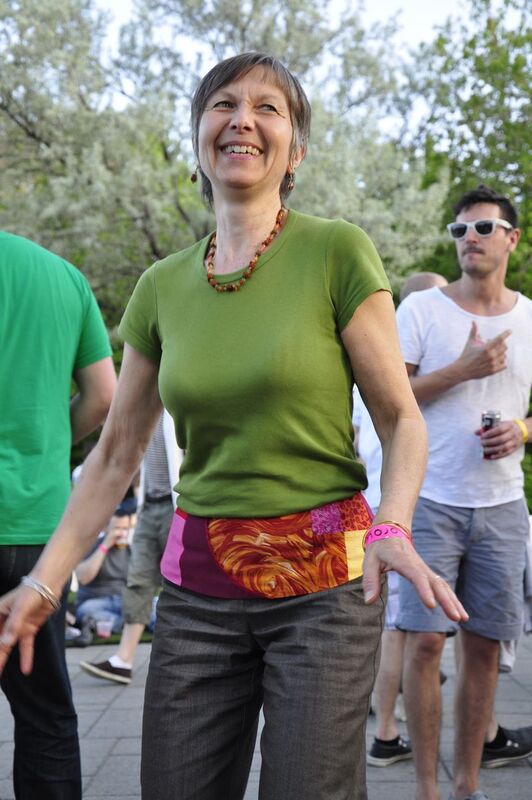
Figure 16. Early Gen X at MUTEK 2011, a thriving intergenerational dancefloor. Photo credit: tobias c. van Veen (2011).
After the sets were done, I stayed until the sweet end of the summer night, following over a thousand or so revellers as they made their way in a chanting and dancing throng to the Metro station. Swarming like a human sea past the turnstiles, we averted our eyes from the usual line of riot-gear wearing cops. Returning from Piknic on the Metro is a part of the experience, as the subway cars are packed with exuberant and wide-eyed crowds. Travellers hopping on the train are greeted with whoops and the scene and the vibe spill back into the city, seeding it with a taste of the dancefloor’s wild abandon…
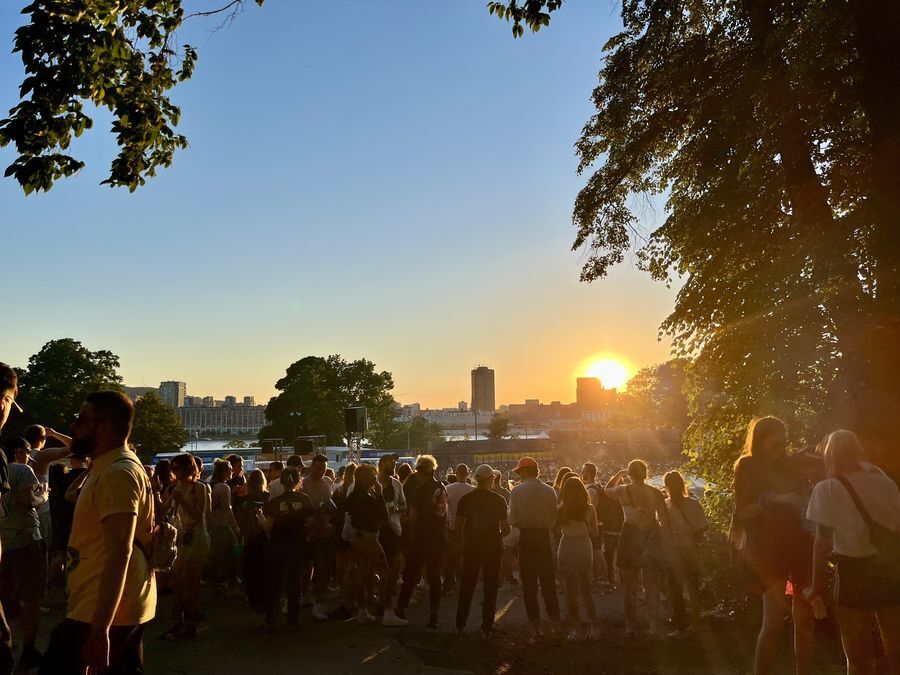
Figure 17. The dancefloor grew so big that we retreated up the hill into the trees with the setting sun. Piknic 2022. Photo credit: tobias c. van Veen (2022).
Dr. tobias c. van Veen is author of Afrofuturism and Abolition: Exodus, Music and MythScience, forthcoming from Bloomsbury Academic (2026). Tobias is co-founder of the Afrofuturist Studies & Speculative Arts series at Bloomsbury; lead editor of the “Black Lives, Black Politics, Black Futures” special issue of TOPIA: Canadian Journal of Cultural Studies (2018); editor of the Afrofuturism special issue of Dancecult: Journal of Electronic Dance Music Culture (2013); and co-editor of the special issue Echoes from the Dub Diaspora (2015). Since 1993 tobias has exhibited with galleries and festivals worldwide as an award-winning media/sound artist, photographer and filmmaker. He is director of the Afrofuturist short film LOST ALIEN (2018), distributed by Cinema Politica and his sound/video installations have been featured by New York Live Arts and the Black Speculative Arts Movement (BSAM) in the exhibitions Curating the End of the World (2020), Altered-Worlds: Black Utopia and the Age of Acceleration (2021) and The Democracy Project at Carnegie Hall (2024). Tobias hosts the Other Planes: Afro/Futurism Podcast, is creative director of sound-art label IOSOUND.ca and he spins vinyl on Twitch at http://twitch.tv/pandemixDJs.
Schiffman, Richard. 2022. “For Gen Z, Climate Change Is a Heavy Emotional Burden.” Yale Environment 360, Yale School of the Environment. <https://e360.yale.edu/features/for-gen-z-climate-change-is-a-heavy-emotional-burden>, (Accessed 01 August 2023).
St John, Graham. 2009. “Neotrance and the Psychedelic Festival.” Dancecult: Journal of Electronic Dance Music Culture 1(1): 35–64.
———. 2017. Weekend Societies: Electronic Dance Music Festivals and Event-Cultures. New York: Bloomsbury Academic.
Straw, Will. 2001. “Scenes and Sensibilities.” Public: Cities Scenes 22: 245–57.
Strommer, Sally. 2001. “‘C'mon to My House’: Underground-House Dancing”. Dance Research Journal 33(2): 72–86.
Tucker, Ethan. 2019. “Montreal’s Iconic Expo 67 Just Completed a Major Renovation.” Architectural Digest, 25 October. <https://www.architecturaldigest.com/story/montreals-iconic-expo-67-completed-major-renovation>, (Accessed 11 May 2023).
van Veen, tobias c. 2009. “Convergence and Soniculture: 10 Years of MUTEK.” Dancecult: Journal of Electronic Dance Music Culture 1(1): 95–117.
———. 2011. Unpublished field notes. Montréal, Canada.
———. 2016. “Being-Scene at MUTEK: Remixing Spaces of Gender and Ethnicity in Electronic Music Performance.” In Weekend Societies: Electronic Dance Music Festivals and Event Cultures, ed. Graham St John, 195–218. London: Bloomsbury Academic Press.
nina obrecht. “Richie & Ricardo @ MUTEK 06”. YouTube, 4:28.
Uploaded on 28 January 2008a.
<https://youtu.be/68uY-wN5HZI?si=Ypd26G9gCWho9_-H>,
(accessed 21 October 2025).
———. “Richie Hawtin vs. Ricardo Villalobos (MUTEK 06)”. YouTube,
5:03. Uploaded on 28 January 2008b.
<https://youtu.be/b63ZZI3ZhtE?si=jI7jA4nBOEFQ63sB>,
(accessed 21 October 2025).
tobias c. van Veen. “MUTEK at Piknik Electronik 2011–2012”. YouTube,
5:33. Uploaded on 9 October 2023a.
<https://www.youtube.com/watch?v=YhlB5sJednM>,
(accessed 4 August 2025).
———. “Piknic Electronik | OctaveOne + Claire | 29 May 2022”. YouTube,
6:21. Uploaded on 9 October 2023b.
<https://www.youtube.com/watch?v=Okb-oHIAiWg>,
(accessed 4 August 2025).