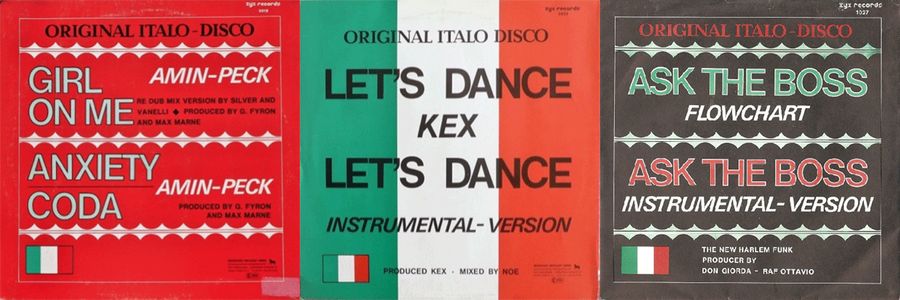
Figure 1. Some of the 12-inch Singles Marketed by ZYX as “original italodisco” before the Italo-Boot Mix and The Best of Italo Disco compilations were released. Photo credit: Guglielmo Bottin (2025).
Historical Emergence and Current Uses of the Term italodisco
University of Bologna (Italy)
<https://dx.doi.org/10.12801/1947-5403.2025.17.01.08>
Since the early 2000s, italodisco has been rediscovered numerous times by new generations of DJs, producers and clubbers, to the point of becoming a perpetual déjà vu. The term italodisco can refer to a largely anthologized repertoire of both well-known and relatively obscure tracks (some of which are considered almost an archaeology of modern electronic dance music), as well as a tongue-in-cheek, openly kitsch approach to production that can be revived in the present to mimic a supposedly inherently Italian version of 1980s dance and synth-pop. As a fully electronic, post-disco, but still pre-electronic dance music style, italodisco often appears in the literature when discussing its popularity among DJs and pioneering musicians in the Chicago and Detroit club scenes of the 1980s, who were admittedly influenced by Italian productions in the development of house and techno (Sicko 2010; Lawrence 2016).
The cultural aspects and reception of italodisco have been discussed extensively, with a particular focus on an imagined and projected Italian-ness from the outside, rather than a musical autochthony claimed by Italian artists (Magaudda 2016; Kaspar 2020). Such analyses are often made from the point of view of the subsequent revival and rehabilitation of italodisco, rather than from the perspective of its initial circulation, and usually do not discuss the historical use of the genre’s name.
Some scholarly accounts, including the one in the Encyclopedia of Popular Music (Conti and Kirby 2017) have attempted to define and describe italodisco on a musical level, although most authors end up lumping together recordings from the late 1970s by producers such as Giorgio Moroder and La Bionda (who worked within the Munich Sound production system) and conservatory-trained arrangers such as Claudio Simonetti, Mauro Malavasi and Celso Valli (who used highly skilled professional session players and vocalists), with the cheaper, programmed and “synthetic” dance music created in smaller studios in the 1980s, often by self-taught musicians coming from punk and new wave (Bottin forthcoming-a). The latter corpus is stylistically indebted to both British new wave/synth-pop and high-energy, a disco subgenre originally inspired by Moroder’s synthesizer-based Eurodisco, but further developed in the USA by Bobby Orlando and Patrick Cowley (Niebur 2022). Adding to the confusion, italodisco is currently used in popular discourse and on streaming platforms playlists to refer to both old and new songs with Italian lyrics produced in a funk, disco or post-disco style.
It seems quite clear to me that a proper discussion of the term has yet to take place. In this article, I will examine its emergence and show how its meaning and use has evolved and multiplied in the present.
Looking at historical uses of the term, an often-told story is that the concept of italodisco was developed in Germany in 1983 to market DJ and club-oriented music licensed from Italy. It is widely believed that the word itself was coined by Bernhard Mikulski, a Polish immigrant who established ZYX Records in Merenberg. In the early 1970s, Mikulski operated as a wholesaler of foreign music, initially with a company named Pop-Import (Kaspar 2020). In 1983, ZYX released two compilations, The Best of Italo-Disco (Various 1983a) and Italo-Boot Mix Various 1983a), which are considered the first anthologies of the genre. Earlier in the same year (according to catalogue numbers), ZYX also released ZYX Mix–A Special Remix of High Energy Danceable Stuff and Synthetic Dance Music (Various 1983b), which were also compilations featuring mostly Italian productions. This suggests that the same repertoire was initially presented under different style descriptors.
In German, the prefix italo is used in compound words to indicate a connection with the country or culture of Italy, such as in Italoamerikanisch and Italowestern, the latter in reference to films that are known in the Anglo-American world as “spaghetti westerns” (I will come back to the use of the qualifier “spaghetti” soon). However, the second half of the word italodisco may be misleading, as the music of the 1980s that ZYX marketed as italo, was sonically very different from the disco music of the 1970s. It had no acoustic drums, soulful vocals, strings or brass sections; it was all electronic and programmed. For this reason, I prefer to use italo or spell italodisco as one word, since it is not merely shorthand for "Italian disco music", as the hyphenated spelling italo-disco may seem to suggest.
While the 1983 ZYX compilations are often credited with being the first to use the term italo, as an index of some inherent Italian essence or quality, a closer examination of the label’s catalogue shows that the phrase “original italodisco”, complete with the Italian tricolour on the record cover, appeared in conjunction with dance tracks licensed from Italy the previous year (fig. 1).
Figure 1. Some of the 12-inch Singles Marketed by ZYX as “original italodisco” before the Italo-Boot Mix and The Best of Italo Disco compilations were released. Photo credit: Guglielmo Bottin (2025).
These included the British-sounding, new wave EP Girls On Me by the Roman band Amin-Peck (1982) which was simultaneously released in Italy and in the UK; a rap version of David Bowie’s “Let’s Dance” (Kex 1983) produced in Milan with vocals by Caribbean-British singer Glen White and Mr. Flagio’s cover version of “Take a Chance” (1983), originally by Bill Laswell’s NYC music collective Material, produced in Genoa by Flavio Vidulich and Giorgio Bacco. ZYX also released Italian-produced funk and soul music, such as Flowchart’s “Ask The Boss” (1982) produced by Davide Romani and Fio Zanotti with vocals by African American singer Alphonso Thornton. "Ask the Boss" was apparently the first record to be marketed as “original italo disco”.
The stylistic diversity of the music on ZYX’s compilations suggests that, at least in the early 1980s, italodisco was not a defined musical genre. Mikulski’s use of the term italodisco probably just reflects the fact that he licensed a lot of dance music from Italy, which he felt the need to present as having some Italian essence. Nominal Italianicity was often seen as commercially attractive, perhaps linked to stereotypes of good taste and genuineness, or the success of Made in Italy products in the fields of design and fashion. However, not all the singles licensed from Italy by ZYX were presented as italo (see table 1).
| Cat no. | Artist | Title | Description |
|---|---|---|---|
| 5017 | Flowchart | Ask The Boss | OID |
| 5018 | Amin Peck | Girl On Me | OID |
| 5019 | Steel Mind | Bad Passion | OID |
| 5021 | Funk Machine | Dance On The Groove | - |
| 5023 | Advance | Take Me To The Top | OID |
| 5030 | KKK | Gang | - |
| 5031 | Mr. Flagio | Take a Chance | OID |
| 5033 | Kex | Let's Dance | OID |
| 5036 | Hypnosis | Pulstar | OID |
| 5038 | Moonbase | Waiting for a train | OID |
| 5040 | Steely Chuck McDonald | Dream | - |
| 5042 | Gaz Nevada | I.C. Love Affair | - |
| 5043 | Samoa Park | Tubolar Affair | - |
| 5044 | Doctor's Cat | Feel The Drive | OID |
| 5046 | Scoop | Say You Go | - |
| 5047 | Smiles | N. 1,4 / Magnetic Dance | - |
| 5048 | Gianni Pettenati | Bandiera Gialla | - |
| 5049 | Kex | Go Go Go | OID |
| 5050 | Faxe | Time For Changes | - |
| 5051 | N.O.I.A. | The Rule To Survive | - |
| 5052 | Mike Cannon | Voices In The Dark | - |
| 5053 | Kangaroo | Kangaroo | - |
| 5056 | Judy B. | Love Is Just A Game | - |
| 5059 | Koto | Japanese War Machine | - |
| 5060 | Hipnosis | Oxygene/Bormaz | - |
| 5061 | Brand Image | Are You Loving | - |
| 5066 | Sylvi Foster | Hookey | - |
| 5067 | The D. Light | Scratch Your Face | - |
| 5068 | Styloo | Pretty Face | - |
| 5069 | Iudy | The Island Of The Sun | - |
| 5073 | Samoa Park | Monkey Latino | - |
| 5074 | Brando | Rainy Day | - |
| 5076 | Baby's Gang | Happy Song | - |
| 5077 | Koto | Chinese Revenge | - |
| 5078 | Phaeax | Talk About | - |
| 5079 | Den Harrow | To Meet Me | - |
| 5080 | Flexx | Love Them From Flexxy-Ball | - |
| 5081 | Savage | Don't Cry Tonight | - |
| 5082 | Video | Somebody (Hey Girl) | - |
| 5083 | Cockroach | Get Back | - |
| 5084 | Body Games | Stop Love | - |
| 5085 | Doctor's Cat | Watch Out | OID |
| 5086 | Digital Game | I'm Your Boogie Man! | - |
| 5087 | Philadelphia | T.S.O.P. | - |
| 5088 | Travel Sex | Sexiness | - |
| 5092 | Helen | Witch | - |
| 5093 | Mark Tower | You Aren't Fall In Love | - |
| 5094 | Talko | The Hustle | - |
| 5095 | Various (compilation) | Italo-Boot Mix Vol.1 | OID |
| 20.029 | Various (compilation) | Zyx Mix "High Energy Dance" | - |
| 20.032 | Various (compilation) | Synthetic Dance Music | - |
| 70.001 | Various (compilation) | The Best of Italo-Disco | OID |
Table 1. Some of the Italian disco tracks licensed by ZYX in 1982-1983 were not initially presented as “original Italo disco” (OID). Moreover, it seems that the italo tag was not used much after release no. 5049.
After the ZYX compilations in Germany, the term italo was picked up in other countries. Benelux-based High Fashion Music published Italo Dance Tracks in 1984 (Various 1984a). In Finland, K-Tel released the compilations Italian Disco Music (Various 1984b) and Hit Line Italo Disco in 1984 and 1986 (Various 1984b; 1986) (Figure 2).
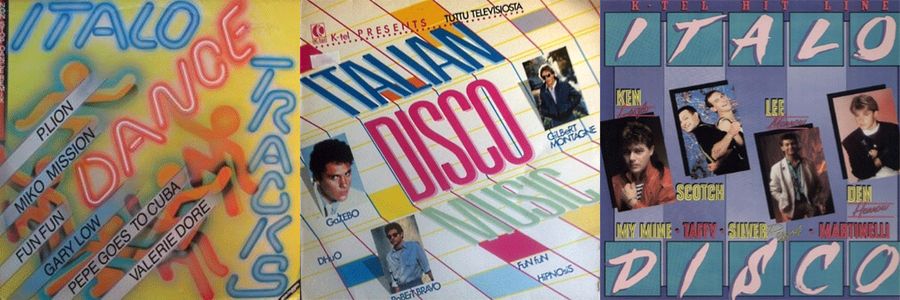
Figure 2. Italodisco compilations released in the Netherlands and Finland around 1984-1986. Photo credit: Guglielmo Bottin (2025).
As italodisco songs quickly became popular throughout Europe and beyond, they spawned foreign attempts at imitation. Stephen Hill (2024) recently compiled a partial list of 1980s imitators of the italo sound: Fake (Sweden), Real Life (Australia), Falco (Austria), Modern Talking, Bad Boys Blue and Alphaville (Germany), F.R. David and Desireless (France). A largely overlooked scene that was stylistically similar to italodisco was the Sabadell Sound, named after the Catalan city where it originated.[1]
It is noteworthy that, until recently, Italians did not refer to this genre of music as “italo”. Before the rehabilitation of the genre in the mid-2000s, it was simply referred to as “dance-music” (D’Agostino 1982) or “disco-dance italiana” (Gedda 1984).[2]
The term “spaghetti dance”, mentioned by some scholars (Kaspar 2020; Pitrolo 2022), was not common among Italians, even though it was occasionally brought up by the national music press (as a reworking of the spaghetti western, a very familiar expression to their readers), in particular when reporting on the European success of Italian artists such as Mike Francis or Matia Bazar (Assante 1986; La Stampa 1986). Such recorded uses of spaghetti dance in the mid-1980s, although sporadic, are consistent with the hypothesis that the word italodisco was not adopted by the Italian journalists until much later. In fact, it appeared in major Italian newspapers such as Corriere della Sera, La Repubblica or La Stampa only around 2005, in articles about "electroclash" events associated with German DJs and record labels like Kompakt, K7! and International Deejay Gigolo (Culicchia 2005; Di Rienzo 2005; Torriero 2005). This shows that the revival and rehabilitation of italodisco from a massified genre that had little to do with 1970s disco and its underlying political message, to one whose appeal surprisingly “endures due to, rather than in spite of, its banality and cheapness” (Pitrolo 2022: 77), took place elsewhere in Europe before it was even recognised in its country of origin.
Going back a few years, the titles of some albums released in the late 1970s show that the idea of cosmopolitan-sounding yet somehow genuinely Italian dance music predates the ZYX releases of 1982 and 1983 (Bottin forthcoming-b). In 1977, multinational label Metronome released Discoteca Italiana (Various 1997) a multi-artist anthology of Italian disco songs; in 1978, Disco Italiano (Ferrari 1978), a collection of dance re-arrangements of traditional and popular Italian songs was released in North America. A similar project was carried out by Italian trumpet virtuoso Nini Rosso and arranger Vince Tempera with Italian Discosound (Rosso 1978), released also in Greece, France, Israel and Canada. In 1979, the compilation Italo Top Hits (Various 1978) was distributed by K-Tel in Germany, Austria and Switzerland, showing how the prefix “italo” in the context of popular music was used in German-speaking countries well before 1983.
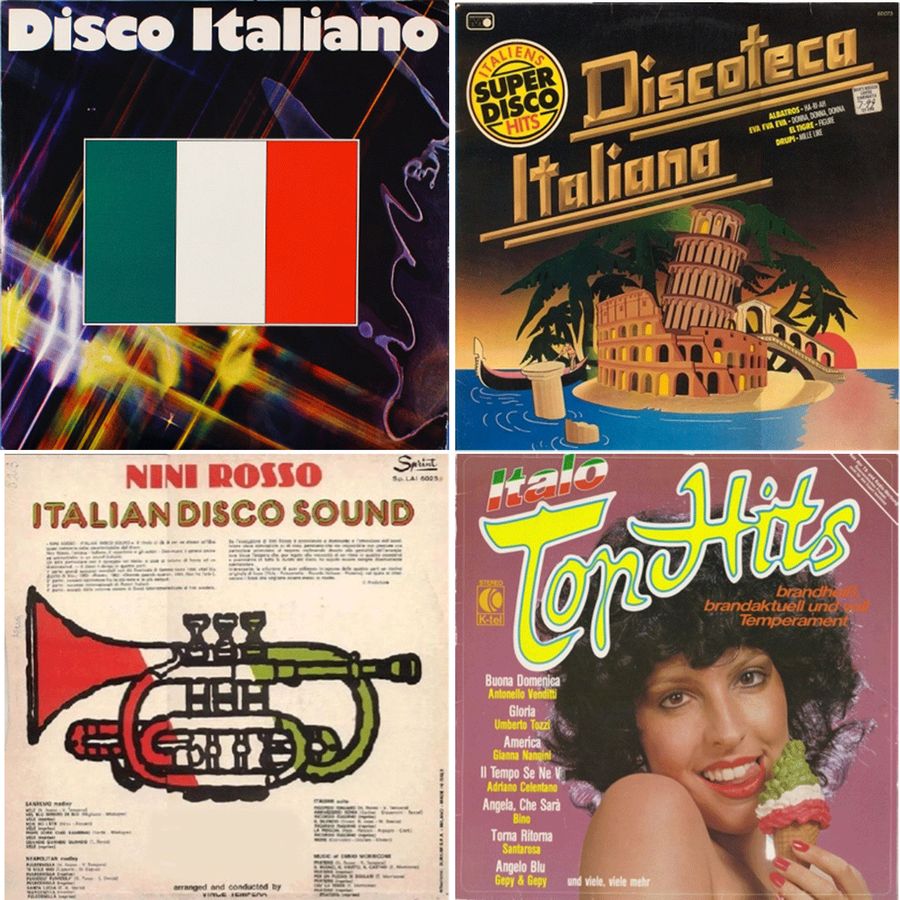
Figure 3. 1977–1979 compilations showing the idea of an Italian disco sound and the use of the term italo predates 1983. Photo credit: Guglielmo Bottin (2025).
In the late 1970s a small number of Italian conservatory-trained arrangers (such as Mauro Malavasi, Celso Valli, Claudio Simonetti and Fio Zanotti) jumped on the disco bandwagon producing songs and longer suites for the international market, often in collaboration with English writers and/or singers. Faceless projects such as Macho, Change, Tantra and recognizable performers such as La Bionda, DD Sound and Easy Going all enjoyed international success, but it was not until much later that such music was described as italodisco. At the time of their original release, the US press referred to these records as Eurodisco or European disco (Freedberg 1981; Miles 1981), just as they did with German and French productions.
In the 1990s, Discomagic’s The Golden Age of Italo Dance (Various 1991) and Saifam’s Italo Disco Golden Hits (Saifam 1994), were anthologies released by labels that worked closely with ZYX and were familiar with the commercial appeal of 1980s italodisco. The first Italian compilation that presented a selection of italo tracks as “underground” music is probably Gianluca Pandullo’s I-Robots - Italo Electro Disco Underground Classics (Various 2004).
Another peculiar attempt to anthologize “alternative” italodisco in the noughties was Disco Italia. Essential Italo Disco Classics (Various 2008), released in 2008 by the British label Strut Records. The booklet has interesting liner notes and interviews, but the music selection comprises mostly disco, funk and boogie, not the electronic styles usually associated with italodisco. Surprisingly, it also includes two French productions: the opening track by Claude Vallois and Denis Desrouvres (“Tha Kee Tha Tha”) and the closing one by Étienne Roda-Gil and Didier Viseux (“Maquillage”). It's unlikely, but possible, that the names of the French songwriters sounded a bit Italian to the British compilers. Perhaps their love of the music blinded them to its origins.
In the 2020s, the word "Italo" has become even more common, although its meaning has become increasingly blurred. Currently, the term is used to refer to (at least) five rather different musical corpora:
1. Electronic dance music and synth-pop, mostly produced in Italy in the 1980s and sung in English (with few exceptions). The first anthologies were probably the ones released in Germany around 1983. I personally refer to this historical corpus as “italo” or “italodisco”.
2. Funk, soul and disco music produced in Italy in the 1970s. Early examples include Marcella Bella’s “Nessuno Mai” (1974) and her 1976 cover version of Modugno’s Neapolitan song “Resta cu’mme” (originally from 1957).[3] Other well-known ones include Alan Sorrenti’s “Figli delle Stelle” and Ornella Vanoni’s “Ti Voglio”, both from 1977. These songs had Italian lyrics and were aimed at the domestic market. This may lead to naming this corpus with an Italian expression: disco italiana. These artists and records initially lacked recognition abroad. However, some were later identified by international audiences since the early 2000s, driven by a growing interest in retro music.
3. Late 1970s disco created by Italian musicians but sung in English. These were producer-driven studio projects, typically recorded by hired session musicians rather than recognisable artists. With songs typically co-written by native English-speaking lyricists and by African American vocalists, they were made with an international market in mind. I refer to this genre as “Italian disco” because it preceded the advent of fully electronic dance music made with sequencers and drum machines. This earlier iteration of Italian dance music productions tried to match the disco sound that was coming out of the United States, Germany and France.
4. Recent dance music and synth-pop that tend to emulate the sound and lyrical/vocal style of 1980s italodisco. The emergence of a scene that could be termed neo-italo is connected to the resurgence of historical italodisco in the mid-2000s. This phenomenon is usually accompanied by the rediscovery of previously overlooked tracks from the past and the repositioning/re-semanticization of the italodisco style as authentic and spontaneous or even underground, in contrast to the perceived standardization and mainstreaming of techno and house during the same period (Jóri 2022: 152). Examples of neo italo include the Berlin-based Italian collective Slow Motion, the Dutch labels Moustache Records, Bordello A Parigi, Venti d’Azzurro, the Swedish studio project Sally Shapiro, the US imprint Italians Do It Better and acts such as Mind Enterprises.
5. New pop-dance tracks with Italian titles or lyrics, produced by both Italian and non-Italian musicians. This 2020s strain of (mostly European) house music usually does not attempt to imitate the italodisco sound of the 1980s but still plays with varying degrees of real or apparent Italianicity. Some even claim to continue a mythicised Italian heritage of dance music, such as the Italomania compilation series from the Bavarian imprint Toy Tonics (the label name itself plays with another ethnic signifier: Teutonic).
Although there is minimal overlap between the aforementioned repertoires, the terms I have proposed are far too similar and thus run the risk of confusion when used casually. Nevertheless, an examination of the contemporary meanings of the term is essential for understanding the stylistic and temporal divergences observed in genre-specific playlists on streaming platforms and in emic discourse about what is currently considered (or passed off as) italodisco.
Most vernacular and journalistic discussions of italodisco tend to emphasise an alleged autochthonous quality, however difficult and problematic it may be to find or claim genuine ethnic or national essentiality in much Western popular music. What is instead often overlooked is that Italians were creating dance music with English lyrics and a cosmopolitan sound, deliberately moving away from the Italian tradition. Therefore, the perceived “Italianness” of both 1970s Italian disco and 1980s italodisco (Straw 2008; Magaudda 2016) is more often the result of a retrospective characterisation rather than something intended or infused by the artists when they were creating this music. The fact that the term “italodisco” was not commonly used in Italy until the mid-2000s seems to confirm this.
Guglielmo Bottin is a lecturer at the University of Milan and research fellow at the University of Bologna. After graduating in psychology, he worked as a producer and DJ, performing in over 30 countries worldwide. During his doctoral fellowship in Musicology, he was a visiting researcher at the Institute for Music and Media Studies at the Humboldt University, where he conducted a theoretical and ethnographic investigation of groove and machinic rhythms. He is a founding member of GRID, a research group on italodisco.
Assante, Ernesto. 1986. “Italiani, Anzi, Europei: Cantano i Matia Bazar”. La Repubblica, 25 October: 25. <https://ricerca.repubblica.it/ricerca/repubblica?query=amsterdam&fromdate=1986-10-25&todate=1986-10-25&sortby=score&author=&mode=any>, (Accessed 6 August 2025).
Bottin, Guglielmo. forthcoming-a. “Problèmes d’Amour: Alexander Robotnick’s Italian Post-Disco Anomaly”. In Just Can’t Get Enough: Synth-Pop and Its Legacies, ed. Geoff Stahl, Nabeel Zuberi and Holly Kruse. Bloomsbury.
———. forthcoming-b. “The Origins of Italodisco”. In Oxford Handbook of Pop Music, ed. Eric Weisbard. Oxford University Press.
Conti, Jacopo, and Phil Kirby. 2017. “Italo Disco”. In Encyclopedia of Popular Music of the World, edited by David Horn and Paolo Prato: 417–19. London: Bloomsbury.
Culicchia, Giuseppe. 2005. “Il Tocco Di Herr Mayer”. La Stampa, 3 November: 50. <http://www.archiviolastampa.it/component/option,com_lastampa/task,search/mod,libera/action,viewer/Itemid,3/page,50/articleid,0245_01_2005_0300_0056_1890146/anews,true/>, (Accessed 6 August 2025).
D’Agostino, Roberto. 1982. “La via emiliana alla dance-music”. Radiocorriere, June: <https://archive.org/details/Radiocorriere-1982-25/RC-1982-25>, (Accessed 6 August 2025).
Di Rienzo, Gabriele. 2005. “Le ‘elettronotti’ Dei Supercrucchi”. Repubblica Torino, 15 April: 14. <https://ricerca.repubblica.it/ricerca/repubblica?query=supercrucchi&view=repubblica>, (Accessed 6 August 2025).
Freedberg, Mike. 1981. “R&B”. The Boston Phoenix, 29 December: 5. <https://archive.org/details/sim_boston-phoenix_1981-12-29_10_52>, (Accessed 6 August 2025).
Gedda, Alberto. 1984. “Ormai La Disco-Dance Italiana è Una Realtà Affermata in Campo Internazionale”. Stampa Sera, 7 September: 17. <http://www.archiviolastampa.it/component/option,com_lastampa/task,search/mod,libera/action,viewer/Itemid,3/page,1/articleid,1379_02_1984_0245_0017_19804743/>, (Accessed 6 August 2025).
Jóri, Anita. 2022. The Discourse Community of Electronic Dance Music. Bielefeld: Transcript Verlag.
Kaspar, Paul. 2020. “Italo Disco. Zwischen Italienität Und Internationalität”. In One Nation under a Groove, ed. Ralf von Appen, 49–74. Bielefeld: Transcript Verlag.
La Stampa. 1986. “Francis e La «Spaghetti Dance»”. 27 March: 19. <http://www.archiviolastampa.it/component/option,com_lastampa/task,search/mod,libera/action,viewer/Itemid,3/page,19/articleid,0989_01_1986_0072_0019_13524194/>, (Accessed 6 August 2025).
Lawrence, Tim. 2016. Life and Death on the New York Dance Floor, 1980-1983. Durham: Duke University Press.
Magaudda, Paolo. 2016. “Un Gioco Di ‘Specchi Culturali’: Popular Music, Italianità e La Circolazione Transnazionale Dell’italodisco”. Cinergie, 9 April: 94–102. <https://doi.org/10.6092/issn.2280-9481/6876>.
Miles, Milo. 1981. “Off the Record”. The Boston Phoenix, 12 May: 28. <https://archive.org/details/sim_boston-phoenix_1981-05-12_10_19>, (Accessed 6 August 2025).
Niebur, Louis. 2022. Menergy: San Francisco’s Gay Disco Sound. New York: Oxford University Press.
Pitrolo, Flora. 2022. “Gimmick! Italo Disco, Copy and Consumption”. In Global Dance Cultures in the 1970s and 1980s, ed. Flora Pitrolo and Marko Zubak, 75–99. Cham: Springer.
Sicko, Dan. 2010. Techno Rebels: The Renegades of Electronic Funk. Detroit: Wayne State University Press.
Straw, Will. 2008. “Music from the Wrong Place: On the Italianicity of Quebec Disco”. Criticism 50 (1): 113–32.
Torriero, Doriana. 2005. “Ballando a Cavallo Di Capodanno”. Corriere Della Sera (Roma), 30 December: 16. <https://archivio.corriere.it/Archivio/interface/slider.html#!torriero-capodanno/NobwRAdghgtgpmAXGA1nAngdwPYCcAmYANGAC5wAepSZeuAlnLtgAQDGUADtvlBBNjABfALpA>, (Accessed 6 August 2025).
Amin Peck. 1982. Girl On Me. ZYX Records (12-inch): ZYX
5018.
<https://www.discogs.com/release/194013-Amin-Peck-Girl-On-Me>.
Bottin. 2009. No Static. Italians Do It Better (12-inch):
IDIB 014.
<https://www.discogs.com/release/1616100-Bottin-No-Static>.
Ferrari, Gene & The Disco Roma Band. 1978. Disco
Italiano. Sunrise Music (2LP): SM-117.
<https://www.discogs.com/release/492981-Gene-Ferrari-The-Disco-Roma-Band-Disco-Italiano>.
Flowchart. 1982. Ask The Boss. ZYX Records (12-inch): ZYX
5017.
<https://www.discogs.com/release/372396-Flowchart-Ask-The-Boss>.
I-F. 1999. Mixed-up In The Hague. Panama Records (CD):
PAN-001.
<https://www.discogs.com/release/17779-Various-Mixed-Up-In-The-Hague-Vol-1>.
Irregular Disco Workers. 2014. Italofficina. Bordello A
Parigi (12-inch): BAP 046.
<https://www.discogs.com/release/7237405-Irregular-Disco-Workers-Italofficina>
Kex. 1983. Let’s Dance. ZYX Records (12-inch): ZYX 5033.
<https://www.discogs.com/release/347306-Kex-Lets-Dance>.
Marcella. 1974. Nessuno Mai. CGD (7-inch): CGD 2407.
<https://www.discogs.com/release/2801407-Marcella-Nessuno-Mai>.
———. 1976. Resta Cu’ Mme. CGD (7-inch): CGD 4303.
<https://www.discogs.com/release/3161977-Marcella-Resta-Cu-Mme-Impazzire-Ti-Far%C3%B2>.
Material. 1982. One Down. Celluloid (LP): 60206-1.
<https://www.discogs.com/release/1263470-Material-One-Down>.
Mr. Flagio. 1983. Take A Chance. ZYX Records (12-inch): ZYX
5031.
<https://www.discogs.com/release/34969-Mr-Flagio-Take-A-Chance>.
Problems, The. 2014. Moustache Italo Anthem. Moustache
Records (12-inch): MST 023.
<https://www.discogs.com/release/5885581-The-Problems-Moustache-Italo-Anthem->.
Rosso, Nini. 1978. Italian Discosound. Sprint (2LP): LAI
6023.
<https://www.discogs.com/release/3607415-Nini-Rosso-Italian-Discosound>.
Sorrenti, Alan. 1977. Figli delle Stelle. EMI (7-inch): 8C
006-18307.
<https://www.discogs.com/release/3085691-Alan-Sorrenti-Figli-Delle-Stelle>.
Vanoni, Ornella. 1977. Io Dentro/Io Fuori. Vanilla (2LP):
OVL 2008-2009.
<https://www.discogs.com/release/11316237-Ornella-Vanoni-Io-Dentro-Io-Fuori>.
Various. 1977. Discoteca Italiana. Metronome (LP): 60.703.
<https://www.discogs.com/release/2487578-Various-Discoteca-Italiana>.
Various. 1978. Italo Top Hits. K-Tel (LP): 1279.
<https://www.discogs.com/release/9285137-Various-Italo-Top-Hits>.
Various. 1983a. The Best of Italo-Disco. ZYX Records (2LP):
ZYX 70.001.
<https://www.discogs.com/release/76104-Various-The-Best-Of-Italo-Disco>.
Various. 1983b. Italo Boot Mix Vol. 1. ZYX Records (LP): ZYX
5095.
<https://www.discogs.com/release/34981-Various-Italo-Boot-Mix-Vol-1>.
Various. 1983c. ZYX Mix (A Special Remix of "High Energy
Danceable Stuff". ZYX Records (LP): ZYX 5026.
<https://www.discogs.com/release/597796-Various-ZYX-Mix-A-Special-Remix-of-High-Energy-Danceable-Stuff?srsltid=AfmBOop_XitygE0SMF_GGgQjmBwNyFqPyUTcFv0rbqXVlwJEuR5qmkT7>.
Various. 1983b. Synthetic Dance Music. ZYX Records (LP): ZYX
20.032.
<https://www.discogs.com/release/821972-Various-Synthetic-Dance-Music>.
Various. 1983e. ZYX Mix (High Energy Danceable Stuff). ZYX
Records (LP): ZYX 20.029.
<https://www.discogs.com/release/3589567-Various-ZYX-Mix>.
Various. 1984a. Italo Dance Tracks. High Fashion Music (LP):
88.097.
<https://www.discogs.com/release/323432-Various-Italo-Dance-Tracks>.
Various. 1984b. Italian Disco Music. K-Tel (LP): ID-7050.
<https://www.discogs.com/release/526963-Various-Italian-Disco-Music>.
Various. 1986. K-Tel Hit Line Italo Disco. K-Tel
(LP): ID-7109.
<https://www.discogs.com/release/254616-Various-K-Tel-Hit-Line-Italo-Disco>.
Various. 1991. Decadance - The Golden Age of The Italo
Dance. Discomagic (CD): CD 546.
<https://www.discogs.com/release/1072144-Various-Decadance-The-Golden-Age-Of-The-Italo-Dance>.
Various. 1994. Italo Disco Golden Hits. Saifam (CD): SM
104-2.
<https://www.discogs.com/release/4558603-Various-Italo-Disco-Golden-Hits>.
Various. 2004. I-Robots - Italo Electro Disco
Underground Classics. Irma (2LP): 515186-1.
<https://www.discogs.com/release/237059-I-Robots-Italo-Electro-Disco-Underground-Classics>.
Various. 2008. Disco Italia (Essential Italo Disco Classics
1977-1985). Strut (CD): STRUT036.
<https://www.discogs.com/release/1351088-Various-Disco-Italia-Essential-Italo-Disco-Classics-1977-1985>.
Various. 2015. Italian Dance Wave - Disco Uno. Slowmotion
(12”): SLOMO 017.
<https://www.discogs.com/release/6575916-Various-Italian-Dance-Wave-Disco-Uno>.
Various. 2024. Italomania II - The New Wave of Italian
Disco. Toytonics (2LP): TOYT150.
<https://www.discogs.com/release/31810859-Kapote-Presents-Toy-Tonics-Italomania-II-The-New-Wave-Of-Italian-Disco>.
[1] More examples of non-Italian italodisco are listed on <https://iventidazzurro.com/iventi-charts-magazines>.
[2] In 1999, Dutch DJ I-F (a.k.a. Ferenc van der Sluijs) released the Mixed-Up in The Hague compilation, including several italodisco tracks alongside 1980s US electro and hi-energy.
[3] The song was covered by Boney M and became a Eurodisco hit under the title “Take The Heat Off Me”. Marcella Bella’s original version, on the other hand, can hardly be described as a “true disco record, as it combines many different styles: pounding rock drums (not four-on-the-floor), Philly Sound-inspired marcato strings, a very prominent lead synthesizer theme and an overly melodic bridge section.