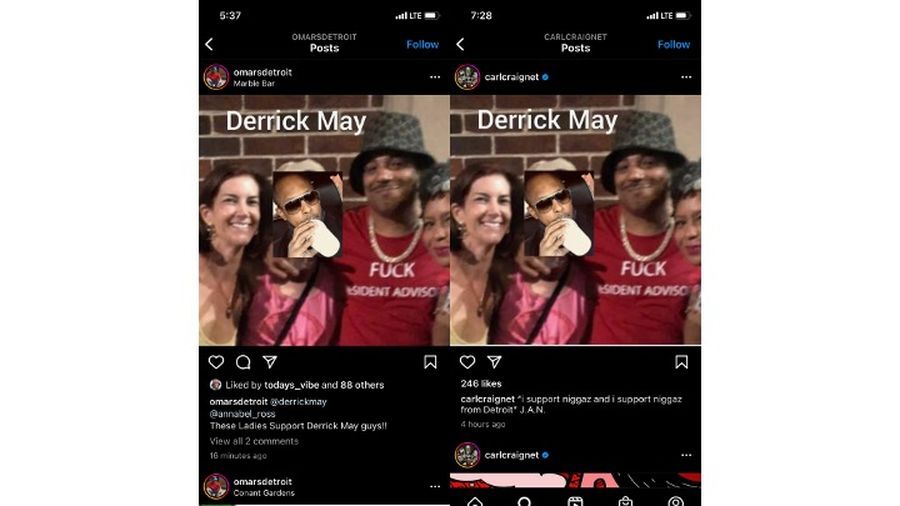
Figure 1. Now Deleted Instagram Posts by Omar S and Carl Craig. Photo credit: Ross (2022a).
On the Spectrum: Where is EDM Placed Within Electronic Dance Music Culture?
Swinburne University (Australia)
RMIT University (Australia)
Electronic dance music artist, Melbourne (Australia)
<https://dx.doi.org/10.12801/1947-5403.2025.17.01.09>
Electronic dance music sits on a wide-ranging spectrum which runs from highly commercial enterprises to radical activities. The history of electronic dance music involves the creation, occupation and repurposing of space for temporal freedoms. These acts, often in defiance of the law, fit within existing theories of Lefebvre (2014), Certeau (2011) and Bey (2003).
Parallel with this commercial to radical spectrum is a spectrum of freedoms. Electronic dance music can exist anywhere on these spectra, from deserts, fields, queer spaces, free parties, squatted buildings, clubs, warehouses, festivals, street parties to a wide range of other spaces. Within these spaces, freedoms are fluid around behaviour, sexual activity, protest and politics. The spectrum of electronic dance music today is extremely broad, from illegal dance parties in storm drains, squatted warehouses and parks, to small intimate clubs and bars, large purpose-built clubs serving audiences a range of sounds, festivals drawing larger crowds over numerous days, some focusing on music, others drawing on the lifestyle, others on big names and spectacle. Electronic dance music sits comfortably across all these spaces.
The opposite is true for EDM. EDM is a sub-genre that populates the most commercial aspects of this spectrum, the largest festivals, the biggest clubs, the sound itself taking a back seat to the spectacle. Freedoms at these events are also curtailed. These events and venues are commercial entities that focus primarily on profit. As such they are criticised for bland race and gender biased lineups, lineups based on social media followers, fake DJs playing pre-recorded sets, the emphasis on spectacle rather than music, the emphasis on the DJ over the music and the DJ over the producer. In the next sections we will explore each of these issues in more detail.
EDM operates within a tightly controlled environment, with strict regulations on behaviour, music selection and even atmosphere. This control, while intended to ensure safety and profitability, can also limit the potential for spontaneity and genuine autonomy. This runs counter to Bey’s (2003) evasion of control, unlike aspects of electronic dance music culture that exist outside the structures of authority, this characteristic is inherently compromised in EDM’s commercial settings. EDM sits within Lefebvre’s (2014) abstract space, a space which operates based on a set of agreed-upon rules and norms that govern behaviour. This includes things like dress codes, security protocols, unspoken social etiquette within events, and even rituals such as cake throwing. These rules, while often implicit, contribute to the controlled and regulated nature of EDM environments. These environments, as spaces of leisure and entertainment, are designed and managed to regulate behaviour and ensure profitability. The ways in which these spaces are managed can be defined, in de Certeau’s terms (2011), as strategies where those in power, such as event organisers and the high-profile artist-brands with whom they collaborate, seek to control the space and the actions of those within it.
These strategies of control manifest in various ways. Firstly, spatial design: the layout of the club or event, the placement of the DJ booth, the bar, the dance floor, and the VIP areas are all carefully considered to direct the flow of movement and create specific atmospheres. This spatial arrangement aims to optimize the use of space for profit maximization while also shaping the desired social interactions. In the early 1970s, DJs were largely unseen, sometimes performing remotely from another room (Lawrence 2004; Brewster and Broughton 2011). DJs like Francis Grasso began to command a degree of “rockstar” status, (Brewster and Broughton 2011). Grasso’s DJ booth at The Sanctuary was situated on the altar of a former church (Morgan 2011). Soon after, DJs were elevated both physically and culturally (Rietveld 2013). By the late 1990s, the EDM DJ had become a superstar (Brewster and Broughton 2006), often equated to God or a quasi-religious figure, epitomised in the Faithless track, “God is A DJ”. This status and attention were accompanied by immense pressure and “high expectations of technical perfection” (Rietveld 2013: 93).
Secondly, rules and regulations: commercial clubs implement various rules and regulations, such as dress codes, entry fees, and security protocols, to control the behaviour of patrons and maintain order. These rules serve to enforce a certain standard of conduct and limit disruptive or undesirable activities. Thirdly, a curated atmosphere to which the music selection, lighting, décor and even the staff’s demeanour contribute, with the intention to evoke specific feelings and associations. This type of experience aims to attract a particular target audience and ensure their continued patronage. Part of this curated atmosphere are the DJ lineups booked by EDM event organisers.
The lineups for most EDM events are predominately bland. Most of the acts are cis-gendered white men. Barnes (2020) identifies that over eighty percent of artists booked for mainstream dance music festivals were male (see also Gadir 2017 and 2023), with seventy six percent of them being white. The queer, POC roots of electronic dance music have been discarded, and the gender and racial diversity at the roots of electronic dance music culture have been corporatised to a bland homogeneity (Ghanny 2016). Statistics show that these events fail to embrace a wider representation (Barnes 2020; Gadir 2017). It is also worth noting that these events repeatedly draw upon the same artists and have similar lineups. This homogeny is characteristic of the abstract space (Lefebvre 2014) that EDM occupies, it needs to erase differences and impose uniformity, prioritizing functionality and efficiency over unique characteristics. EDM prioritizes maximizing capacity and profit over creating unique atmospheres. When faced with these accusations, of gender imbalance, whitewashing and lack of diversity, the usual response is denial and rejection (Gadir 2017), which is a product of abstract space. The abstract space of EDM is primarily motivated by money.
EDM is bound by exchange. This is evident in EDM culture, where events function as businesses, with entry fees, drink prices and VIP sections all reflecting the commodification of space and experience. Commercial dance clubs, while offering spaces for subcultural expression, can also contribute to the reproduction of dominant culture in an effort to maintain profit. The emphasis on consumerism, the promotion of mainstream music and trends and the reinforcement of social hierarchies through EDM’s VIP culture can all work to undermine the temporary autonomous zones’ (Bey 2003) potential for genuine subversion and social critique.
Meanwhile, the raw ingredient for EDM, the music, doesn’t command huge sums. Instead, the value-adds are less musical. These include DJs and performance fees that are inflated thanks to commissions paid to booking agents, managers and publicists; elaborate technical and hospitality riders; large scale audiovisual production costs and more.
With only a small portion of the proceeds paid to producers, producers who might otherwise be comfortable in the studio are instead forced onto the stage and into the limelight. The hyper fixation on commercial outcomes and profits can be to the detriment of performing artists who have many mouths to feed and many fans to please. This is evident in the suicide of the artist, Avicii (Youngs 2018; Ptatscheck 2021; Taylor 2024). Following Avicii’s suicide, his father called for a systematic overhaul of the music industry, in terms of how record labels, agents, managers and organisers take care of artists struggling with issues of alcoholism and drug dependence. The eyes of EDM are firmly focused on profit, which makes it blind to other more pressing issues.
EDM’s blindness to issues of representation and diversity go hand in hand with its blindness to the behaviour of some artists. Over the last decade numerous artists have been accused of sexual assault. EDM festivals continue to book these big-name artists and in some instances their peers have rallied in support of the accused. The artist Diplo has been accused of sexual assault, statutory rape and revenge porn but is still playing at large commercial festivals (Craighead 2024; Lewis 2023 and 2024). Similarly, Gaslamp Killer has continued to play shows after facing rape allegations (Hernan 2018). Derrick May has faced several sexual assault allegations and continues to play shows (Ross 2020b).[1]
After publishing allegations of sexual assault and harassment by Derrick May in late 2020 and early 2021, journalist Annabel Ross (2022a) was banned from reviewing Detroit’s Movement Festival. When she attended nevertheless as a patron, Detroit identities including Carl Craig and Omar S posted her photo on social media accompanied by strong words in support of May. Ross has championed the cause against harassment by high profile EDM personalities, notably with her article exposing the behaviour of Eric Morillo, who before his death was still playing shows even though sexual assault allegations had been widespread (2020a; 2020c). The Russian artist Vakula, whose misogyny was highlighted by his use of album artwork to attack several big-name female DJs, is still playing shows (Cetin 2019b). This toxic behaviour extends beyond EDM events to music vendors, with Beatport accused of having a toxic workplace (Ross 2022b).
Figure 1. Now Deleted Instagram Posts by Omar S and Carl Craig. Photo credit: Ross (2022a).
As part of the tightly controlled environment of EDM events, it has become common for superstar DJs to “fake” it, playing pre-recorded sets synced to fireworks and visual effects. The lack of DJ skills on display is reminiscent of Milli Vanilli rather than any bona fide rockstar. A succinct (and amusing) commentary on the cult-like status enjoyed by EDM DJs is the Saturday Night Live (SNL) skit, “When Will The Bass Drop?” (2014).
Saturday Digital Short: When Will the Bass Drop? - SNL (Saturday Night Live 2014).
In this skit, the DJ’s performance is more theatrical than musical. With the main musical goal reduced to pushing an oversize button marked BASS, he teases the audience, even feigns a heart attack, but also finds time to play Jenga, fry an egg and process credit card payments from adoring fans (Callander 2023). The skit is likely inspired by commentary from Deadmau5: “I just roll up with a laptop and a midi controller and select tracks and hit a spacebar” (Truss 2012). The audience don’t know what the DJ is doing and some don’t care (Callander 2023). At the same time, some have started to scrutinise EDM DJs’ performances, as is evident in this TikTok:
@madelineargy ♬ original sound - madz
Madz (Madeline Argy 2023)
A visibly distressed @madelineargy asks: “What the fuck do DJs actually do? Because I don't think they're remixing the song on the spot. I think they make it ahead of time. So what dials are they pressing? What are the buttons doing? Is it a volume dial? Is it even connected to anything?” (2023).[2] The audience are noticing that fake DJs are part of EDM’s ongoing efforts to emphasise spectacle over music.
The emphasis of spectacle rather than music, and emphasis on the DJ over the producer suggest that EDM festivals are more focused on what is seen than what is heard. Each new event attempts to dominate the audiences’ senses. Within this atmosphere, organised transgressions can occur that give the feel of behavioural freedoms but are again aspects of control and spectacle.
Steve Aoki 80 ft. Cake Throw Hits Fan In Wheelchair (Uncut Version) (Steve Aoki 2013).
While Steve Aoki’s elaborate cake-throwing is unmistakably attention-seeking, it could also be read as an attempt at reconnecting with fans, especially as festival numbers have grown and artists are situated further away from the crowds. Note the “I want cake in my face” sign in the image below, this is a two-way interaction between artist and audience.
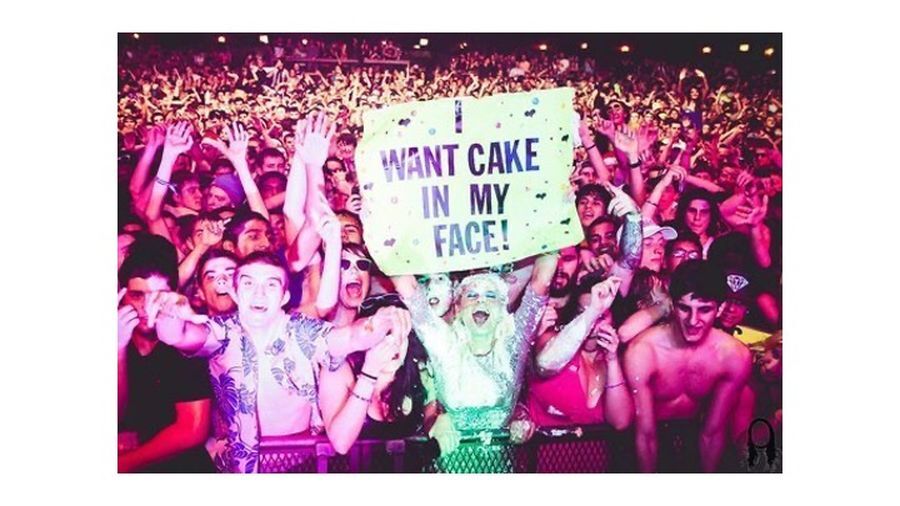
Figure 2. I Want Cake In My Face! Photo credit: Ultramusic (2013).
These antics first appeared in live shows as a marketing accompaniment to a music video, released on Aoki’s Dim Mak label. The video featured cakes exploding in the faces of various characters, and Aoki brought the reference to his performance to coincide with the release (Etalk 2023). The caking endured long after the publicity cycle, however, thanks to phenomenal public demand from Aoki fans, who can be seen actively seeking out his theatrics, with a select few “lucky” patrons enjoying the full experience of that interaction.
Sonnemondsterne Festival (steveaoki 2024).
Aoki estimates that he throws around 2000 cakes per year in his performances (Etalk 2023)—the exclusivity of being caked is relative to the large number of patrons attending EDM festivals and Aoki headline shows. The cake throwing becomes part of the curated atmosphere of EDM events and in its own way become a mechanism for control. It restricts the artists to a particular act, the audience to a specific form of participation and reinforces the idea of a space governed by consensus.
Steve Aoki Cake Throw and How it Started | THE FEED | Etalk (2023).
While commercialisation has led to a bland mutant that is called EDM, commercialisation has brought money into electronic dance music culture too, and in a few cases this has had a positive impact. Red Bull Music Academy (RBMA) was one such positive. RBMA is known for increasing knowledge, building capacity and sharing histories and approaches from seminal artists who shaped electronic dance music culture. RBMA began in the late 1990’s starting out as workshops and lectures for electronic dance music makers, delivered by prominent DJs and artists. RBMA took place in different parts of the world each year and during its twenty-year life span held events in more than 60 countries (Red Bull Music Academy n.d.). The Austrian beverage company funded the academy and its activities until 2019 when it was shut down. RBMA became an incubator for artists and a range of activities at the intersection of electronic dance music culture and contemporary art. While it was seen as a successful marketing vehicle for the beverage company, redirecting their energy away from sports, RBMA built capacity by seeking out underground artists and presenting their knowledge to a wider audience.
RBMA’s activities saw a variety of speakers and artists from diverse backgrounds and artistic practices extending beyond music and across the creative arts. This helped to promote early career artists that were local to each RBMA event. The mix of higher profile and emerging artists provided real and aspirational pathways for artists early in their career, that were not necessarily linked to commercial appeal. This type of community building placed a focus on artistic merit and education, rather than financial requirements or gain. While Wall Street praised Red Bull’s financial success, more importantly, the wider electronic dance music community celebrated and danced to its artists.
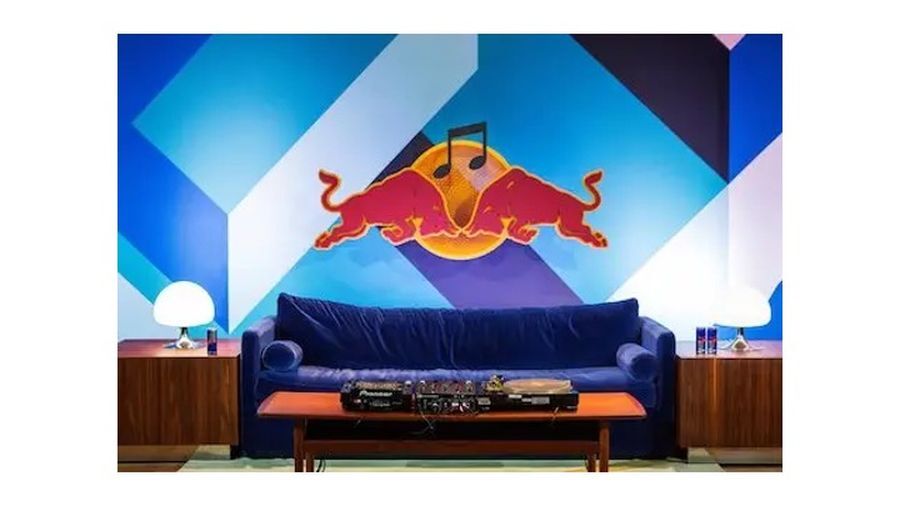
Figure 3. The Red Bull Music Academy Interview Couch. Photo Credit: Cettin (2019a).
EDM is a problematic mutation of electronic dance music. It sits in its own space on the spectrum, an abstract space, wallowing in a huge money pit but restricted in behaviour because of financial strategies. It is not allowed to enjoy the temporal behavioural freedoms that take place at events at the other end of the spectrum.
The lack of freedom for artists to express themselves can inhibit and thwart experimentation. This is disturbingly evident in the form of promoters requesting pre-recorded DJ sets at EDM events. The homogenous music selection, and a hyper focus on social media erodes individual expression and the ability to explore new creative outcomes. The controlled settings which limit artists within the EDM environment place elevated expectations on techniques that are perfect in every way with a degree of rockstar status. Electronic dance music was born out of an underground post-disco subculture, and created a new sound and culture through experimentation and diversity. In contrast, EDM culture is a supercharged hyperreal package that places emphasis on entertainment and experience with an appetite for the bigger, bolder, which equates to more popular and commercially appealing events.
For the audience, the spectacle places emphasis on the experience over the music. The atmosphere is strictly controlled and regimented, from song choice, synchronised visuals and pyrotechnics to the audiences’ expected behaviour. This undermines the personal freedoms of the audience and removes them from any participatory experience to the role of spectator. In many electronic dance music genres and cultures, the audience is an active participant, the dancefloor is the focus, with artists and audience interacting in the dance (Haberfeld 2021). In EDM, the audience is a consumer exploited for commercial gain, audiences are given a homogenous and predictable experience that lacks diversity and prioritizes profit over unique artistic expression. EDM is lucrative and market driven. It is a controlled experience that uses the strategic management of space, atmosphere and artist image, at the expense of genuine artistic expression and audience autonomy.
For the industry, EDM’s opportunity to grow and develop is stymied by its reliance on profit. The only path for development is to become even larger, with greater spectacle, and by doing so become less and less human and even more distant from the electronic dance music culture from which it mutated.
The authors acknowledge that electronic dance music sits on a wide spectrum that includes commercial and profit driven activities. What we are primarily concerned by is EDM’s deliberate move away from genuine music creation, performance, creative practices and how this will impact the future of expression across electronic dance music culture.
Dylan Davis (PhD) has extensive experience in design process, community engagement, digital storytelling, interaction design, and audio production and composition. Dylan is also a composer and a musician whose practice covers performance and production. His works includes music productions for festivals such as Melbourne Music Week, recordings for a range of international record labels and community-based music projects. He explores the compositional and performance methods and practices for electronic and electroacoustic music of the techno and acid house genre.
Mike Callander (PhD) is a Lecturer at RMIT University and a DJ/producer. His practice-led research examines the intersections between DJ techniques, music formats, performance technologies and dance music culture. Callander’s creative outputs have reached European music festivals, art galleries in Singapore and Melbourne, Australian morning TV and international record stores. He has collaborated with chart-topping commercial artists such as The Avalanches while also maintaining a coveted weekly DJ residency at Revolver Upstairs, arguably Australia’s best-known nightclub. Callander is Ableton Certified, one of fewer than 400 people worldwide to be endorsed as an educator by the makers of Live and Push.
David Haberfeld (PhD) is an accomplished and awarded electronic dance music artist, academic, researcher and music technologist with diverse experiences as producer, composer, and performer since the early 1990s. David has successfully led and responded to the rapid changes in the way we produce, perform, market, manage and teach electronic music for three decades; including how digitalisation has impacted audience engagement. His experiences are unique, combining academic, industrial, and creative practices with over 200 published music works. Under the artist moniker Honeysmack, he is globally recognised as someone who has significantly contributed to Australia’s electronic dance music community for many years.
Barnes, Marcus. 2020. “Race, representation, and reshaping festival culture”. Beatportal, 23 November: <https://www.beatportal.com/articles/17193-race-representation-and-reshaping-festival-culture>, (accessed 4 September 2024).
Bey, Hakim. 2003. TAZ: The Temporary Autonomous Zone, Ontological Anarchy, Poetic Terrorism. New York: Autonomedia.
Callander, Mike. 2023. “Thinking About Syncing: Examining the impact of 21st century DJ technology on the production and performance of Electronic Dance Music”. Chroma: Journal of the Australasian Computer Music Association 38(1): 1–16.
Certeau, Michel de. 2011. “Part I.” In The Practice of Everyday Life, 1–42. Berkeley: University of California Press.
Cetin, Marissa. 2019a. “Red Bull Music Academy and Red Bull Radio to Shut Down This Year”. Resident Advisor, 3 April: <https://ra.co/news/43548>, (accessed 23 May 2025).
———. 2019b. “Nastia, The Black Madonna Respond to Phallic, Misogynist Vakula EP Artwork”. Resident Advisor, 26 April: <https://ra.co/news/43685>, (accessed 4 November 2024).
Craighead, Danielle and Cohen, Olivia. 2024. “Untangling the Sexual-Misconduct Allegations Against Diplo.” The Cut, 27 June: <https://www.thecut.com/article/untangling-the-sexual-misconduct-allegations-against-diplo.html>, (accessed November 4, 2024).
Gadir, Tami. 2023. Dance Music: A Feminist Account of an Ordinary Culture. New York: Bloomsbury Academic.
———. 2017. “Forty-Seven DJs, Four Women: Meritocracy, Talent and Postfeminist Politics”. Dancecult: Journal of Electronic Dance Music Culture, 9(1): 50–72. <http://dx.doi.org/10.12801/1947-5403.2017.09.01.03>
Ghanny, Hassan. 2016. “How White Kids Stole House Music from Black Aunties”. Cuepoint. 13 September. <https://medium.com/cuepoint/how-white-kids-stole-house-music-from-black-aunties-bf8f1df6a31e>, (accessed 4 November 2024).
Haberfeld, David. 2021. “Bacharach, Britney and Acid Techno Bangers: The Evolving Compositional Practice of Honeysmack”. Ph.D. Dissertation (Composition), Monash University.
Hernan, Andy. 2018. “The Gaslamp Killer Is Attempting to Reboot His Career”. Mixmag, 7 September: <https://mixmag.net/feature/the-gaslamp-killer-return-sparks-celebration-and-protest>, (accessed 5 November 2024).
Lawrence, Tim. 2004. Love Saves The Day: A History of American Dance Music, 1970-79. Durham: Duke University Press.
Lefebvre, Henri. 2014 [1991]. The Production of Space. Oxford: Basil Blackwell.
Lewis, Carly. 2023. “Diplo Accused of Distributing Revenge Porn in New Police Report.” Pitchfork, 6 December: <https://pitchfork.com/news/diplo-accused-of-distributing-revenge-porn-in-new-police-report/>, (accessed 4 November 2024).
———. 2024. “Diplo’s Canadian Festival Dates Continue Amid New ‘Revenge Porn’ Lawsuit | Billboard Canada, 8 July: <https://ca.billboard.com/music/music-news/diplo-canadian-festivals-revenge-porn-lawsuit>, (accessed 4 November 2024).
Morgan, Johnny. 2011. Disco: The Music, The Times, The Era. New York: Sterling.
Ptatscheck, Melanie. 2021. “Avicii and mental health of EDM stars.” In The Evolution of Electronic Dance Music, ed. Ewa Mazierska, Les Gillon and Tony Rigg, 105–23. New York: Bloomsbury Academic.
Red Bull Music Academy. n.d. “About”. <https://www.redbullmusicacademy.com/about>, (accessed 11 November 2024).
Rietveld, Hillegonda C. 2013. “Journey to the Light? Immersion, Spectacle and Mediation.” In DJ Culture In The Mix, ed, Bernardo Attias, Anna Gavanas and Hillegonda C. Rietveld, 79–102. New York: Bloomsbury.
Ross, Annabel. 2020a. “Erick Morillo Is the Tip of the Iceberg.” Medium, 16 October: <https://annabelross.medium.com/erick-morillo-is-the-tip-of-the-iceberg-2ddfe5c72128>, (accessed 14 November 2024).
———. 2020b. “Women Provide Accounts of Sexual Harassment and Assault by Derrick May” Resident Advisor, 13 November: <https://ra.co/features/3780>, (accessed 4 November 2024).
———. 2020c “Kristen Knight: ‘It Is so Important for Women to Come Forward.’” Mixmag, 9 December: <https://mixmag.net/feature/kristen-knight-dj-miami-story-morillo>, (accessed 4 November 2024).
———. 2022a. “On Derrick May, Detroit techno and toxic male solidarity.” Medium, 16 June: <https://annabelross.medium.com/on-derrick-may-detroit-techno-and-toxic-male-solidarity-785b5e9d4417>, (accessed 20 October 2024).
———. 2022b. “Former Beatport Employees Allege a Toxic Workplace Where Fear Ruled.” VICE, 23 August: <https://www.vice.com/en/article/beatport-electronic-dance-music-online-store-toxic-workplace/>, (accessed 15 November 2024).
Taylor, Alex. 2024. “Avicii’s Dad on His Son’s Legacy, Mental Health and Survivor’s Guilt.” BBC News, 16 June. <https://www.bbc.com/news/articles/c722jj9ep2wo>, (accessed 4 November 2024).
Truss, Si. 2012. “Deadmau5: "we all hit play."” Music Radar, 26 June. <https://www.musicradar.com/news/dj/deadmau5-we-all-hit-play-550353>, (Accessed 20 October 2024).
Ultramusic. 2013. “Erick Morillo Is the Tip of the Iceberg.” tumblr, 10 August: <https://ultra.tumblr.com/post/57901500219/steve-aokis-best-cake-throw-ever?>, (accessed 23 May 2025).
Youngs, Ian. 2018. “Avicii: The Superstar DJ behind Some of the Decade’s Biggest Hits.” BBC News, 20 April: <https://www.bbc.com/news/entertainment-arts-43845137>, (accessed 4 November 2024).
Etalk. 2023. “Steve Aoki cake throw and how it started” YouTube,
4:02. Uploaded on 11 March 2023.
<https://www.youtube.com/watch?v=-HhVIlqWkOw>,
(accessed 2 October 2024).
Madeline Argy. (@madelineargy). 2023. “What Do DJs Actually Do?
Explained in Detail”. TikTok, 21 July.
<https://www.tiktok.com/@madelineargy/video/7257983414014446875>,
(accessed 20 October 2024).
Saturday Night Live. 2014. “SNL Digital Short: When Will The Bass
Drop? – SNL” YouTube, 2:54. Uploaded on 19 May 2014.
<https://www.youtube.com/watch?v=DoUV7Q1C1SU>,
(accessed 12 November 2024).
Steve Aoki. 2013. “Steve Aoki 80 ft. Cake Throw Hits Fan In
Wheelchair (Uncut Version)” YouTube, 1:50. Uploaded on 8 August, 2013.
<https://www.youtube.com/watch?v=CMaoLcbSOYA>,
(accessed 4 August 2025).
steveaoki. 2024. “Sonnemondsterne Festival”. Instagram, Uploaded 28
August 2024.
<https://www.instagram.com/reel/C_NNLwLxxrD>,
(accessed 4 August 2025).
[1] While the music of artists like Gaslamp Killer and Derrick May originated on the Electronic Dance Music spectrum at points distinct from EDM, as a result of their subsequent success and reach their actions can be scrutinised as part of the EDM discource.
[2] @madelineargy’s performance is likely also theatrical and satirical.