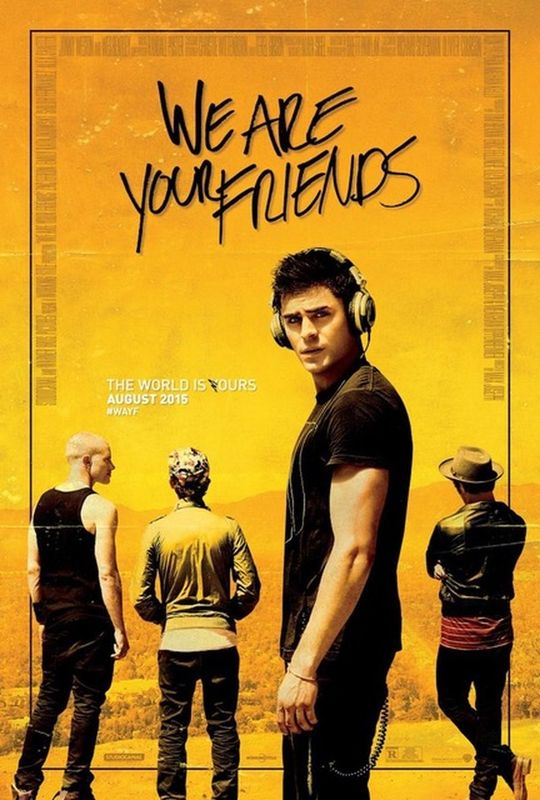
Figure 1. We Are Your Friends poster. Photo credit: Warner Bros. Entertainment Inc. (2015).
A Laptop and Some Talent: We Are Your Friends, the EDM Pop DJ and the Gig Economy
University of California San Diego (USA)
<https://dx.doi.org/10.12801/1947-5403.2025.17.01.10>
Figure 1. We Are Your Friends poster. Photo credit: Warner Bros. Entertainment Inc. (2015).
What does it take to be a DJ? For Cole Carter, the aspiring DJ at the center of We Are Your Friends (WAYF), it takes three things: “a laptop, some talent, one track” (Joseph 2015: 0:04:32). It’s a strange claim in a film ostensibly meant to celebrate DJ culture. It seems to evoke familiar criticisms from dance music detractors—that DJs lack real talent or simply play “one track” on repeat. So why does he say it?
The answer resides in the new story WAYF tells about DJs. WAYF positions the aspiring DJ within the context of the post-Great Recession years and the rise of the gig economy. The DJ is now a gig worker, and DJing is more of a business venture than an art. Further, WAYF casts DJing as a cheap and easy investment, aligning it with the gig economy promise that anyone can reach financial liberation with cheap technologies and little training. By telling a new story about DJs within the framework of the gig economy, WAYF amplifies a resonance that scholars have detected: between electronic dance music culture and neoliberalism.
Dancecult readers might cringe at the thought of watching WAYF: but they shouldn’t dismiss it entirely. The film follows Cole Carter, a DJ in his early twenties (played by Zac Efron), as he struggles to become a successful DJ and escape his working-class background. He lives in his friend’s parents’ backhouse, performs to make ends meet and, with his three best friends, takes on odd jobs with the hopes of one day renting a home of his own. Everything changes when Cole meets the famous DJ James Reed, who takes him under his wing and encourages him to develop a signature production style. After some mishaps—including an affair with James’s girlfriend—Cole succeeds in writing the one track that launches his career and rolls out his path to financial stability.
We Are Your Friends - Official Trailer (Joseph 2015).
Yes, there are the images of Efron’s toned arms on the DJ deck, parties in the Hollywood hills and monologues about how to “rock the party”. But cringe aside, the film should intrigue Dancecult readers because, as a product of the EDM pop industry, it grants insight into an underexplored topic: the conceptual meanings of EDM pop. By EDM pop, I mean the genre that rose to popularity in the late 2000s, whose sound combined house music and Top 40s pop, and whose culture was crystalized by DJ superstars and massive commercial festivals (Holt 2017). As Fabian Holt suggests, EDM pop comprises more than just tracks on the radio—it is defined by its ties to a broader commercial industry, including DJ equipment companies and festivals. It is within this broader industry that WAYF resides. Dreamt up by Hollywood, distributed by Warner Brothers Pictures, WAYF sought to capitalize on the popularity of EDM pop: the year it was released, 2015, was the year that the EDM pop industry amassed an estimated all-time high of $6.9 billion (Watson 2015: 24). Thus, while WAYF might tell fictional stories about parties and DJs, these stories disclose real data about the conceptual meanings of the genre, a subject which few scholars have studied (Holt 2017). The meaning of the DJ has long interested electronic dance music scholars; it is this meaning in the context of EDM pop that I explore here.
EDM pop soared into the mainstream just following the Great Recession, while the gig economy was accelerating. The term gig economy defines both a general condition in which more people work in temporary gig and contract roles, as well as the particular boom of platform-based companies like AirBnB and Uber, which created gig marketplaces in industries once serviced by workers in stable employment. While the gig economy existed before the Great Recession, it took off after it, when rising numbers of people lost their jobs or hunted for additional gigs because their wages were low (Ravenelle 2019: 175). As the gig economy grew, more workers joined the ranks of the precariat class: workers who lack the job stability, benefits and employment protections of the generations before them (Standing 2014: 10). At the same time, gig economy corporations strove to downplay the negative impact of the gig economy on workers through a new ideology: the promise that ordinary people could attain financial freedom, independence and the chance at becoming their own boss through gig work (Dolber et al. 2021: 9). Both the gig economy and EDM pop rose to prominence in the years following the Great Recession, and the gig economy is critical to understanding the new claims that WAYF makes about DJs.
WAYF places the aspiring DJ within the context of the post-Great Recession years and the rise of the gig economy. The DJ is now a gig worker, and DJing is portrayed as more of a business venture than an art. Of course, DJs have always worked for themselves and made money from gigs. But within dance music scenes they tended to be viewed, first and foremost, as artists. While WAYF at times portrays the DJ as an artist, this portrayal is frequently eclipsed by the DJ as an entrepreneur who views his work as a promising venture. The film frequently parallels Cole’s journey to gain success as a DJ with that of other workers who seek success in gigs. For example, Cole’s plight as a DJ is set in parallel with his friends’ plight in their respective gigs: one friend acts; another books parties and another isn’t sure what he wants to do but suggests they start an app. While these gigs may be creatively coded, the friends refer to themselves not as artists but entrepreneurs, and they treat their gigs as enterprises. In addition to this plot framing, Cole explicitly parallels DJing with other entrepreneurial ventures when, in the critical opening line, he says “These days, you can invent an app. Start a blog. Sell shit online. But if you're a DJ, all you need is a laptop, some talent, one track” (Joseph 2015: 0:04:29). Here, he draws a parallel between the choice to DJ and the choice to invent an app, start a blog or sell shit online and other purely commercial business ventures. The result is that WAYF glosses over the artistry of DJing while spotlighting the business acumen behind it, linking DJing more strongly to a gig economy job than to an artistic vocation. The aspiring DJ acts as a parable for the aspiring worker in the gig economy at large, searching for financial stability in the precarity of the post-Great Recession years.
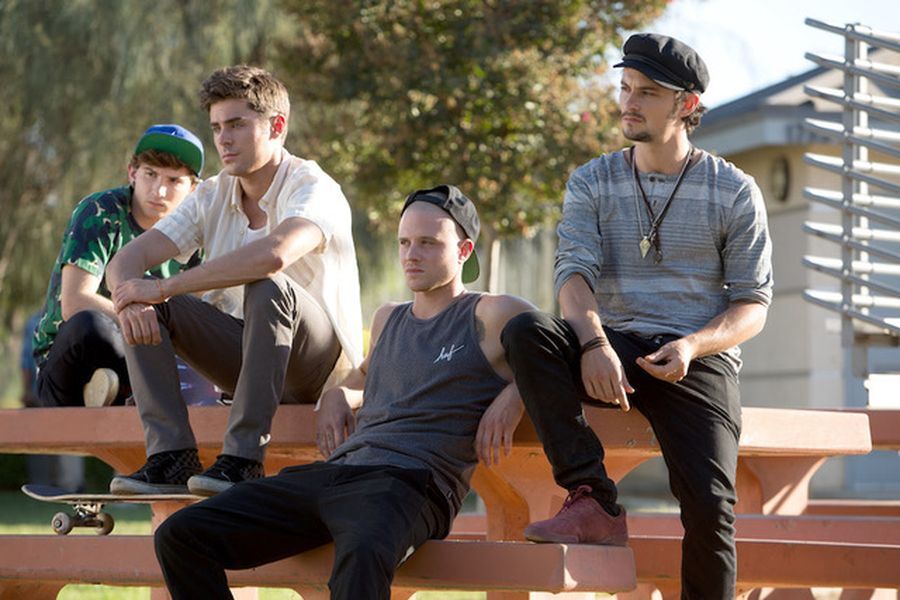
Figure 2. Cole and his friends dream of financial independence. Photo credit: Tony Rivetti Jr., Warner Bros. Entertainment Inc. (2014).
Additionally, WAYF portrays DJing as a cheap and easy investment, connecting it to the gig economy promise that anyone can attain financial independence even if they lack money or training. The gig economy establishes not only a material condition but an ideological promise: the promise that anyone, regardless of their background, can be their own boss. If in the past, starting your own business required money, today, thanks to platform apps, you need only cheap items you’re already likely to own—like a laptop or a cell phone. Similarly, if in the past you needed training, today you can learn on the job. The new precariat class, expected to work a variety of gigs throughout their life, lack the occupational identity and training that was common for stable employed workers before them (Standing 2014: 10). Accordingly, a staple of gig economy opportunities is that they require little training even as they promise big rewards.
Cole positively describes DJing as cheap in the opening line, when he says that DJing requires only “a laptop, some talent, one track” (Joseph 2015: 0:04:32). That first requirement—the laptop—is a low-cost investment, a relatively cheap item that many people already own. The laptop resonates specifically with the promise of the gig economy, which positions technologies as key to gain financial independence.
The second and third requirement on Cole’s list—some talent and one track—highlight the idea that performing and succeeding as a DJ is easy. While talent implies an innate ability, to classify a practice according to how much talent it requires is to suggest how difficult it is to do well. By suggesting that DJing requires only some talent, he suggests that doing it well is relatively easy. Furthermore, to claim that the successful DJ requires only one track is to differentiate the DJ from other creative vocations for which success depends on prolific output, such as albums or a catalogue of work. This underscores the ease with which one can succeed as a DJ. Cole shores up this idea in another moment in the film, when he says that to “rock a party”, “you need a caveman’s sense of rhythm, cursory knowledge of mathematics and the broad strokes of ninth grade biology” (Joseph 2015: 0:26:21). Here, each of the three things a DJ needs imply only a rudimentary level of skill. The caveman’s sense of rhythm suggests that the rhythm is so basic even a low-skilled, technologically ignorant person could grasp it. Meanwhile, the knowledge of mathematics required—this could be a stand-in for musical principles—need only be superficial. The only other thing one must know is basic facts recalled from high school. Together, these statements suggest that DJing is something one can do without much prior training. Thus, like the promise of starting your own Etsy business with no experience and only the laptop in your living room, DJing is promised as a cheap and easy way to gain financial independence.

Figure 3. Efron (as Cole Carter) at the decks. Photo credit: Warner Bros. Entertainment Inc. (2014).
The lines I’ve traced between the EDM pop DJ and the gig economy enhance our picture of the relationship between electronic dance music and neoliberalism more broadly, a relationship other scholars have investigated. Tim Lawrence highlights the link between neoliberalism and electronic dance music cultures when he repeatedly suggests in Love Saves the Day that the cultural and aesthetic practices of the disco movement foreshadowed the rise of neoliberalism (2003). For example, he suggests that early disco DJs—independent, non-unionized musicians who club owners favored because they were cheaper than bands—were “proto-flexible workers”, foreshadowing neoliberalism’s flexible labor revolution (Lawrence 2003: 436). Additionally, Robin James argues that the neoliberal virtue of resilience is reflected in the sonic aesthetics of EDM pop. Just as resilience fetishizes bouncing back from injury, EDM pop sonically foregrounds a pleasurable bouncing back from tension and transgression (James 2015: chap. 1).
Compared with these examples, the trend I trace here—DJing as a gig job, and the DJing art recast through the logic of the gig economy—represents a more explicit link between a dance music culture and neoliberalism. It also reveals how, when neoliberalism infuses a dance music culture, familiar meanings shift. The claim that DJing is easy has, indeed, long annoyed the fans and makers of electronic dance music. But in the context of the gig economy, what was once a pejorative becomes a compliment.
Special thanks to my mom, Ellen Smucker, for her feedback.
Rosie Dwyer researches neoliberalism and popular music, with a focus on EDM pop and the years after the Great Recession. She is a PhD candidate at the University of California San Diego and she likes to rave. She can be reached at rosie.dwyer@gmail.com
Dolber, Brian, Michelle Rodino-Colocino, Chenjerai Kumanyika and Todd Wolfson. 2021. “Introduction”. In The Gig Economy: Workers and Media in the Age of Convergence, eds. Brian Dolber, Michelle Rodino-Colocino, Chenjerai Kumanyika and Todd Wolfson, 3-15. New York: Routledge, Taylor and Francis Group.
Holt, Fabian. 2017. “EDM Pop: A Soft Shell Formation in a New Festival Economy”. In Weekend Societies: Electronic Dance Music Festivals and Event-Cultures, ed. Graham St John, 1st ed, 25-43. London: Bloomsbury Publishing Inc. <https://doi.org/10.5040/9781501311413>.
James, Robin. 2015. “Hearing Resilience”. In Resilience & Melancholy: Pop Music, Feminism, Neoliberalism. Winchester, UK: Zero Books, Apple Books e-book.
Lawrence, Tim. 2003. Love Saves the Day: A History of American Dance Music Culture, 1970-1979. Durham: Duke University Press.
Ravenelle, Alexandrea J. 2019. Hustle and Gig: Struggling and Surviving in the Sharing Economy. Oakland, California: University of California Press.
Standing, Guy. 2014. “The Precariat”. Contexts 13 (4): 10–12. <https://doi.org/10.1177/1536504214558209>.
Watson, Kevin. 2015. “IMS Business Report 2015”. Presented at the International Music Summit, Ibiza, May: <https://www.edmendedigitalewereld.nl/wp-content/uploads/2015/06/ims-business-report-2015-18.pdf>, (Accessed 14 November 2024).
Joseph, Max, dir. 2015. We Are Your Friends. Amazon Prime
Video. Burbank, CA: Warner Bros. Pictures.
<https://www.imdb.com/title/tt3787590/>.